- A UK breeder's breed guide
- Carlisle
- Cumbria
Comprehensive Breed Insight: The Ultimate UK Staffordshire Bull Terrier Guide Handbook
What a Staffordshire Bull Terrier is to live with, written by the people who raise them.
In this guide
- The breed standard, trait by trait
- Temperament, and the myths about it
- Daily care, health and legal status
The Breed, in Four Figures
Four readings off this guide, for anyone who came for those.
- 11–17 kgadult weight
- 14–16 inheight at the shoulder
- 12–14 yearstypical lifespan
- 1 hourof vigorous exercise a day
Staffordshire Bull Terrier: The UK Staffordshire Bull Terrier Guide for UK Dog Lovers
Bold. Loving. Loyal. The Staffordshire Bull Terrier is more than just a dog—it’s a devoted companion and a beloved member of many UK households. Known affectionately as “Staffies,” these remarkable dogs possess a unique blend of strength, courage, and unparalleled affection. If you’re considering welcoming a Staffordshire Bull Terrier into your life, our comprehensive Staffordshire Bull Terrier guide UK is your essential resource.
We breed this one dog, in Carlisle. Our litters are KC registered; every puppy is microchipped and vet checked before it goes. What follows is the build, the temperament, the work a day asks for, the conditions the breed is screened for, the law, and five things worth asking any breeder, us included. Where we cannot stand behind a figure, we leave it out.
The Breed Itself, on Film
Our puppy film, on a page of its own, has the player ready to watch.
It is a short film of our puppies rather than a spoken guide: the breed itself, before the writing below sets out what it is and what it asks of you.
Why Choose a Staffordshire Bull Terrier?
The Staffordshire Bull Terrier is truly a breed like no other, offering unique qualities that make them a fantastic choice for many UK households:
A Medium, Muscular Terrier
Fact
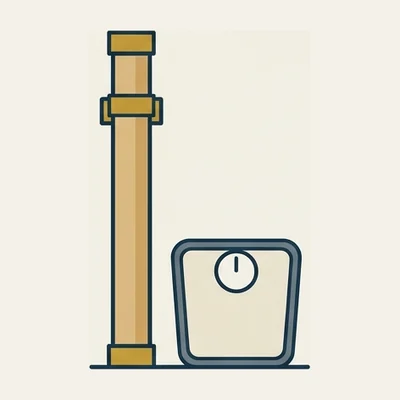
14 to 16 inches (35 to 41 cm) at the shoulder, 11 to 17 kg (24 to 38 lbs), males generally at the higher end. A dog you can lift, and a dog that can pull you over.

A People Dog Before Anything Else
Fact
Affectionate, loyal and wired for company. It is the trait the breed is loved for, and the one that decides whether your house suits it.

Not on the Government's Banned List
Fact
Not a banned breed: the Staffordshire Bull Terrier is not on the government's list of types banned under the Dangerous Dogs Act 1991.

Twelve to Fourteen Years With Good Care
Fact
Our own facts table puts a well-bred, well-kept Staffy at 12 to 14 years with good care and good genetics.
Blue Staffy Breed Information: Characteristics at a Glance
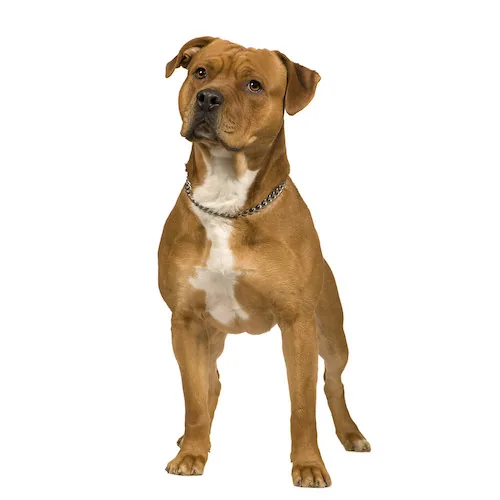
The Staffordshire Bull Terrier is a distinct and instantly recognisable breed. Our focus on Blue Staffy breed information highlights their striking coat colour, but their physical traits are universally Staffy: These characteristics combine to create a powerful, agile, and expressive dog that is well-suited to various activities and lifestyles.
| Trait | The Staffordshire Bull Terrier |
|---|---|
| Height at the shoulder | 14 to 16 inches (35 to 41 cm) |
| Weight | 11 to 17 kg (24 to 38 lbs), males generally at the higher end |
| Coat | Short, smooth and close-lying, with no undercoat |
| Colours | Red, fawn, white, black, brindle and blue, and those colours with white |
| Head and ears | Broad and deep, pronounced cheek muscles, a distinct stop; rose or half-pricked ears |
| Eyes | Usually dark, round, and set to look straight ahead |
| Tail | Medium length, low set, tapering to a point, not curled over the back |
| Lifespan | 12 to 14 years with good care and good genetics |
| Temperament | Loyal, affectionate, courageous, alert and playful; people-centred |
The registry's own breed standard for the Staffordshire Bull Terrier is what those rows describe, in the standard's own words. Ask us about the breed if a dog you have met does not match them.
What the Blue Coat Is, and Is Not
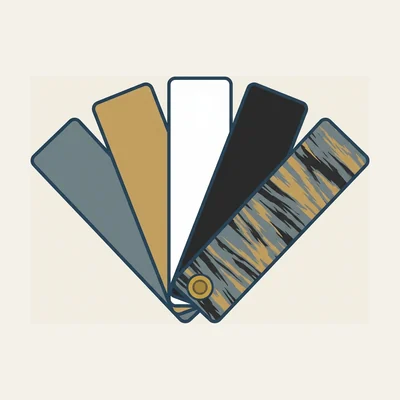
Blue is one of the colours in the row above and nothing more: not a separate breed, a separate standard or a separate size. A blue Staffy is measured against these nine rows, as a brindle one is.
Three more notes from this section
The Table Is the Dog, Not the Advert
Every row is checkable against an animal standing in front of you, which is why a guide opens on a table rather than on adjectives.
A Dog Well Outside These Rows Is Worth A Question
Not a disqualification and not an accusation — but the comparison further down this page is the thing to read before any money changes hands.
Breed Note: Height Is Taken at the Withers
That is where the shoulder blades meet, not the top of the head, which flatters by inches.
History & Heritage of the Staffordshire Bull Terrier in the UK
The Staffordshire Bull Terrier’s story is deeply interwoven with the industrial heartlands of 19th-century England, particularly Staffordshire and the Black Country. Bred originally for bull and bear-baiting, and later for dog fighting, these tenacious dogs required immense courage, strength, and agility. However, as these cruel sports were outlawed, the breed’s incredible temperament and loyalty quickly shone through.

Bred in the Industrial Midlands
The breed was put together in the industrial Midlands — Staffordshire and the Black Country — by people who wanted a bulldog's grip and a terrier's quickness in one animal small enough to keep in a back yard. That is the whole of the design brief, and the dog on your sofa is still built to it.
Why It Had to Be Safe With People
Here is the part that explains the modern temperament, and there is nothing sentimental in it. A dog used in those sports was handled constantly — lifted, washed, separated, carried home — by the people who kept it, and one that turned on those people was not bred from. So tolerance of human handling was selected for as hard as anything else was, generation after generation, and it outlived the cruelty that produced it. The affection is not a modern softening of the breed. It is the oldest thing in it.
Recognised by the Registry in 1935
The breed gained formal recognition by the registry in 1935, which is the point at which it stopped being a type and became a breed with a written standard behind it. The registry's own Staffordshire Bull Terrier breed page is where that standard and what a registration covers are set out.
Three more notes from this section
1935, the One Date That Matters
1935 is the year the registry recognised the breed. The rest of the story is told without dates, because a date nobody can check is no help to you.
The Reputation Came From the Job, Not From the Dog
What the breed was used for is a fact about people. Saying it plainly is what leaves the myths section able to answer anything; skipping it is what leaves them standing.
Breed Note: The Old Name Gives the Recipe Away
"Bull and terrier" says what was crossed with what, long before anybody wrote a standard.
Staffy Temperament Guide for Families: Loyalty, Love, and Laughter

A Staffy attaches itself to a household rather than to a room, which is why the breed wants company more than it wants a garden.
The Staffy temperament guide for families defines the breed’s true appeal. Staffies are renowned for their incredibly affectionate and people-oriented nature. They thrive on human companionship and love nothing more than being an integral part of family life.

Loyal, and Attached to Its People
The bond is the breed. A Staffy attaches itself to a household rather than to a room in it, and the dog that follows you from the kitchen to the bathroom is behaving as designed. Everything else here follows from that one trait.
Affectionate to the Point of Being A Lap Dog
For a dog built like this, the ambition is remarkably small: the sofa, a person, ideally a blanket. Visitors are greeted as arrivals rather than as intruders.
Courageous and Alert, Rarely A Guard Dog
Brave, and alert enough to tell you somebody is at the door. A guard dog, no — the breed is far too pleased to see whoever it turns out to be. If you want a dog that keeps strangers off the path, this is the wrong one.
Playful Into Adulthood
Fetch, tug and outright silliness carry on well past the first birthday and, in most of the dogs we have bred, well past the third.
Ideal UK Home Setup for a Staffordshire Bull Terrier
Choosing the right dog involves ensuring your lifestyle and home environment match the breed’s needs. A Staffordshire Bull Terrier can adapt well to various UK living situations, but certain aspects are ideal for their well-being:
In practice that means a garden fenced high enough and solidly enough to hold a determined, muscular dog, or a walking routine reliable enough to stand in for one; people in and out of the house through the day; and floors you are relaxed about. No square footage and no minimum garden size is given here: company matters more than either. Read about the two parents our puppies are socialised around to see the house ours are raised in.
First-Time Owners
First-time owners can certainly succeed with this breed, given a real commitment to two things kept up rather than merely started: early socialisation, and reward-based training. The RSPCA's independent advice on socialising a puppy is written by people with nothing to sell you, which is why we point at them rather than at ourselves. Flat living works on the same terms, given the exercise and the mental stimulation below.

Where A Staffy Is the Wrong Dog
Long hours alone. That is the honest answer, and it is the only hard one on this page. A breed selected for wanting people does not learn to stop wanting them: a Staffy left alone all day gets bored, then anxious, then destructive, usually in that order. If the house is empty from morning to evening most days, this is the wrong breed.

Children and Other Pets
Supervised around children, as any dog should be. Other animals want slow, early introductions: the prey drive is real, and a nice temperament does not argue you out of it.

Three more notes from this section
Who the Breed Is Wrong for Belongs in the Guide
A page that will not name a bad fit is a sales page in a guide's clothes, so we name it.
Company Is the Requirement, Not the Garden
The flat with somebody in it beats the house with nobody in it, every time, and it is the inversion most buyers do not expect.
Breed Note: Tell Us Your Week, Not Your Square Footage
The hours a house stands empty are what we ask about, because they are what the dog notices.
Daily Care Tips: Ensuring Your Staffy’s Thriving Life
Providing excellent UK Staffordshire Bull Terrier care tips involves attention to exercise, diet, training, and grooming.
An Hour A Day, Split Into Two Sessions
At least one hour of vigorous exercise a day, ideally split into two sessions. Vigorous is the word doing the work there: a slow amble round the same block twice is an hour on paper and nothing at all in the dog. Brisk walking somewhere that smells different each time, running in a secure space, and play with a person in it.

Mental Stimulation
The other half of the job is mental. Agility, obedience, flyball and scent work all suit a breed that is quick, biddable and easily bored, and ten minutes of thinking settles this dog more reliably than another mile does. Puzzle toys at home and recall practice off-lead in a safe, enclosed area do the same work in smaller pieces. It is also the half most often skipped.

Feeding A Staffy Without Overfeeding One
Food formulated for the life stage, in measured meals at set times rather than a bowl left down, and treats used sparingly, as training rewards rather than snacks. This breed will eat whatever is in front of it and puts weight on readily. No brand and no quantity is named here: the bag states a guide and your vet knows your dog. Our blog guides go further on feeding and training a new puppy for the first fortnight in detail.
Training That Works on This Breed
Positive reinforcement, started early, and identical from every adult in the house. Staffies are intelligent and eager to please, and they are also strong-willed, which together mean they learn what you are actually teaching rather than what you meant to teach. Basic commands and lead manners are the foundation; consistency is what makes them stick.
Grooming A Short Coat
A short, close-lying coat with no undercoat wants a weekly brush and very little else. Baths when the dog has found something worth a bath, and not on a schedule. Nails, ears and teeth are the parts owners put off, and the teeth are the ones that cost the most later. The PDSA's veterinary guide to caring for a Staffordshire Bull Terrier covers the same ground with a vet behind it.
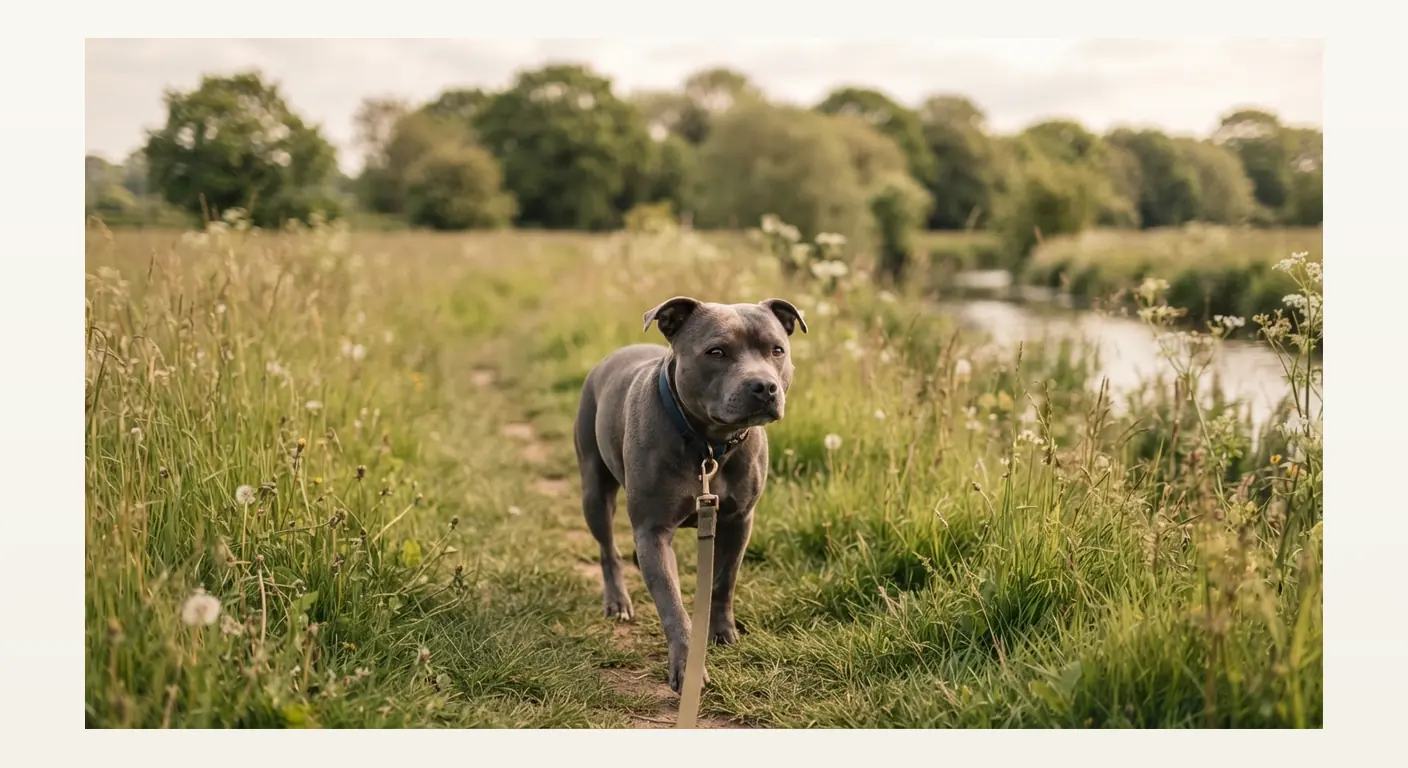
Life Stage Care for Your Staffordshire Bull Terrier
As your Blue Staffy grows, their needs evolve across puppyhood, adulthood, and senior years. Understanding these life stages ensures your Staffy remains healthy, happy, and well-adjusted throughout life.
A puppy does far less than the adult hour and builds up to it, because the joints are still arriving; an older dog does less again and wants it in smaller pieces. No meal counts, worming intervals or visit frequencies are printed here — those belong to your own vet, who is looking at your dog rather than at a breed.
Three more notes from this section
The Hour Is A Floor, Not A Target
It is the figure worth planning a week around. A dog that gets more than it is not being spoilt.
Weight Is the Thing Most Entirely in Your Hands
Ribs easy to feel and not to see is the whole of the test. It takes ten seconds and it is worth doing weekly rather than annually.
Breed Note: The Hour Is Better in Two Halves
Morning and evening, rather than one march: a dog worked twice is calmer for longer either side.
Common Health Concerns & Our Ethical Breeding Commitment
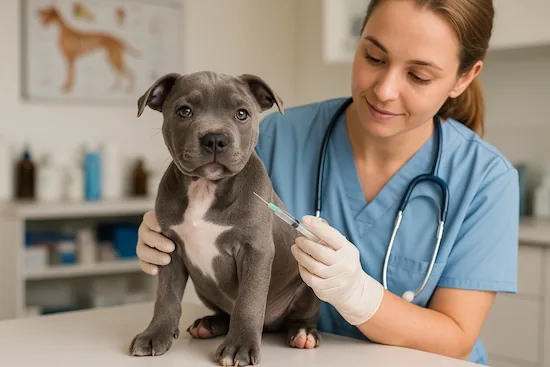
The health problems Staffordshire Bull Terriers have, as we name them: two DNA-testable conditions, skin trouble, and eye and knee checks.
While the breed is generally healthy, staying informed about your Staffy’s health and potential concerns is part of being a responsible Staffy owner. For a deep dive into our commitment to health, please visit our dedicated Blue Staffy Health page. Here, we provide a brief overview:

The Two DNA Tests
The registry's own page on the L-2-HGA DNA test names the first: L-2-hydroxyglutaric aciduria. For hereditary cataracts, the registry's own page on the HC-HSF4 DNA test does the same job. Two is the number of DNA screens this breed has, and a third named on a breeder's site is a credential nobody can check.
Two Tests on Both Parents
Both our parents are DNA tested for both conditions, which is the one claim in this section about our own dogs rather than about the breed. Our health page sets out every test we run and what each looks for, names each test against a dog rather than against the kennel, and is where what the two tests mean for a puppy is explained at length.

Skin, and Why A Short Coat Shows It Early
Skin allergies and demodicosis are the breed's other common complaints. A coat this short shows irritation early, which is a gift if somebody is looking at it, and the first thing worth raising with a vet is usually what is in the bowl.
Eyes and Knees, Under the BVA/KC Schemes
Beyond the two DNA tests, the health page records two BVA/KC screens for our own dogs: an eye examination for inherited eye disease the HC-HSF4 test does not cover, and patella grading for knee health. Neither prints a score, there or here. No hip or elbow score is claimed anywhere on this site.

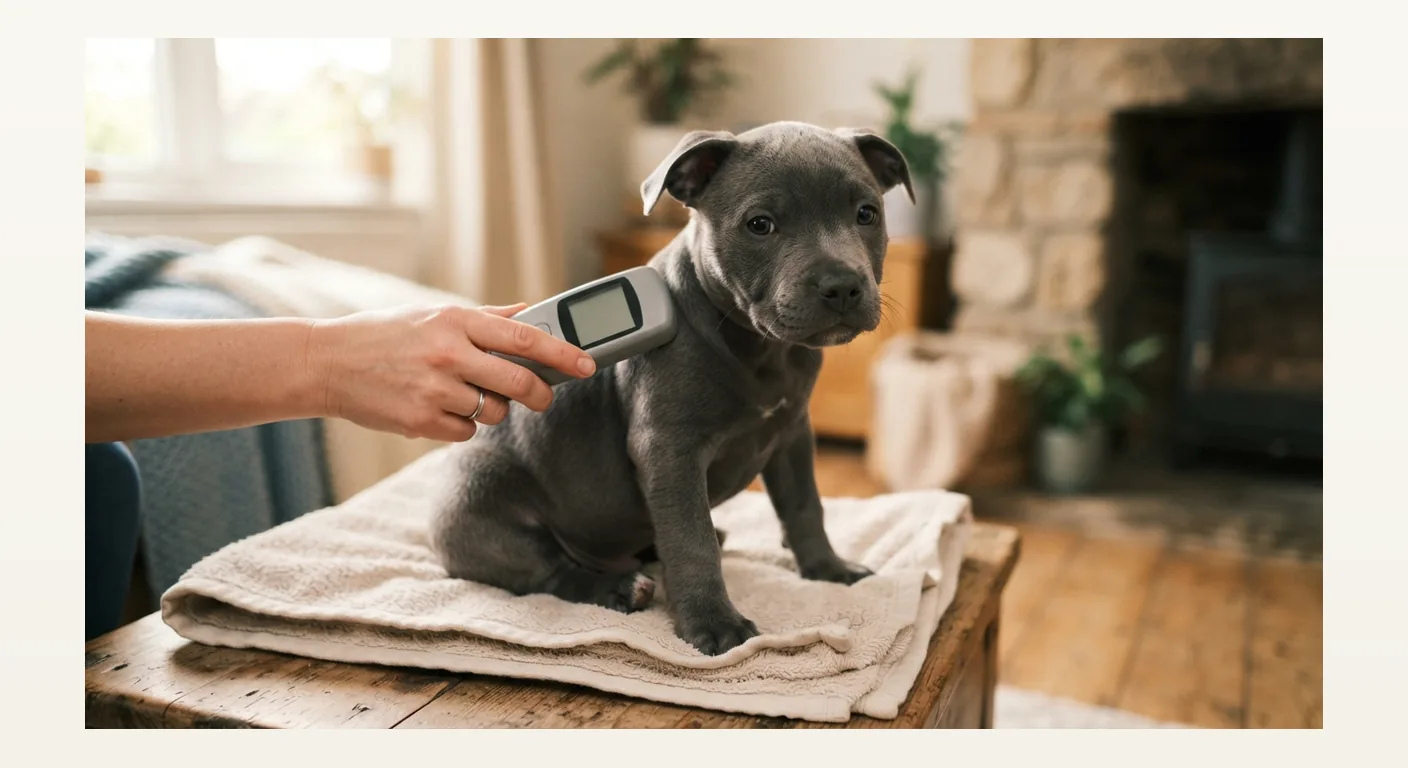
The Vaccination Course
The course protects against distemper, parvovirus, leptospirosis and hepatitis. Its first part is done before a puppy leaves us and the rest belongs to your own vet. Every puppy is also microchipped before it goes, which is legally required in the UK and often done by the breeder, and the number is ready to transfer into your name. The PDSA's guide to dog vaccinations sets the whole schedule out, written by a charity with no puppies to sell.
Three more notes from this section
A Guide Names the Conditions and Then Stops
No percentage, prevalence or prognosis appears beside a condition anywhere on this page. We hold none, and a number invented to sound authoritative is worse than the silence it replaces.
Two Tested Parents Is A Fact, Not A Policy
A DNA test is taken by a named dog, which is why ours are listed against the two parents rather than as a house rule.
Breed Note: Ask Which Tests Each Parent Had
Ask a breeder to name the health tests behind each parent and to show you the vet records; a good one does both without being pressed.
Staffies and UK Law: Understanding the Breed’s Legal Status & Public Perception
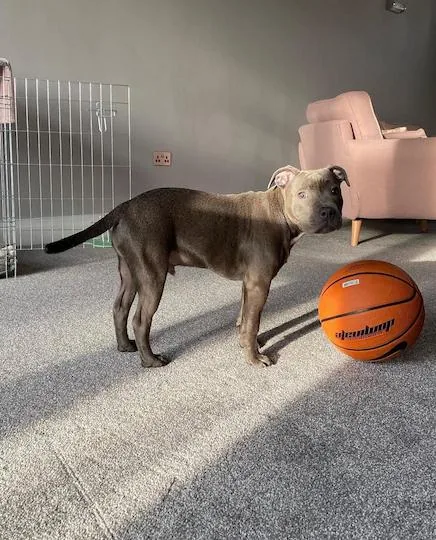
For any UK resident considering a Staffordshire Bull Terrier, it’s vital to understand their legal standing and common public perceptions. Due to historical events and often misinformed media narratives, some bull breeds face unfair scrutiny. While the Staffordshire Bull Terrier is not banned in the UK, there are key legal and practical housing considerations to know before bringing one home.

Legal Status in the UK
It is critically important to know that the Staffordshire Bull Terrier is NOT a banned breed under the Dangerous Dogs Act 1991 in the UK. This act bans specific types of dogs, including the Pit Bull Terrier, Japanese Tosa, Dogo Argentino, and Fila Brasileiro. The Staffordshire Bull Terrier is a distinct and recognised Kennel Club breed, and it is not one of the banned types.
The government's own list of banned dog types is where to read that rather than take our word for it, and it is the list the paragraph above is describing.

Landlords and Housing Associations
Not banned is not the same as allowed where you live. A landlord, a housing association or a block's own rules can restrict the breed even though it is not a banned breed, and a verbal yes at a viewing is worth nothing six months later. Ask for the pet policy in writing before you sign anything, and ask for it while you are still choosing between places rather than after a deposit has gone in — a policy you have read is a question answered, and a policy nobody will put in writing is an answer too. That single sentence is the whole of the housing advice this page gives, because it is the only part of it we can stand behind: we are breeders, the tenancy is yours, and the pet clauses in it are between you and whoever wrote them.
Staffy Myths vs. Facts: Dispelling Common Misconceptions
Beyond legal misunderstandings, the Staffordshire Bull Terrier is often subject to various myths. Let’s separate fact from fiction to truly appreciate this wonderful breed.
Four of them, each answered in a sentence, and each answered without a statistic. They are worth answering rather than ignoring because they are not harmless: a myth is what a landlord half-remembers, what a neighbour repeats across a fence, and what a family quietly decides on before they have met one of these dogs. The honest position is that the first is about how a dog is bred and raised, the second is about anatomy that does not exist, the third is a reason for closer attention rather than less, and the fourth is contradicted by every training class this breed turns up to.
Myth: Staffies Are Inherently Aggressive
Behaviour is decided by breeding, socialisation, training and handling, not by a breed label — which is why everything above this line is about those four things and none of it is about the label.
Myth: Staffies Have Locking Jaws
No dog has a locking jaw. The mechanism does not exist in any breed's anatomy, so there is nothing here to be careful about: the claim is simply false.
Myth: Staffies Do Not Feel Pain
They feel it, and they are stoic about it, which is a reason to watch this breed more closely rather than less — a Staffy will carry on wagging through something another dog would tell you about.
Myth: Staffies Are Untrainable
Intelligent, eager to please and quick to learn, given reward-based training. The strong-willed part is real and is a reason for consistency, not a ceiling on what the dog can be taught.
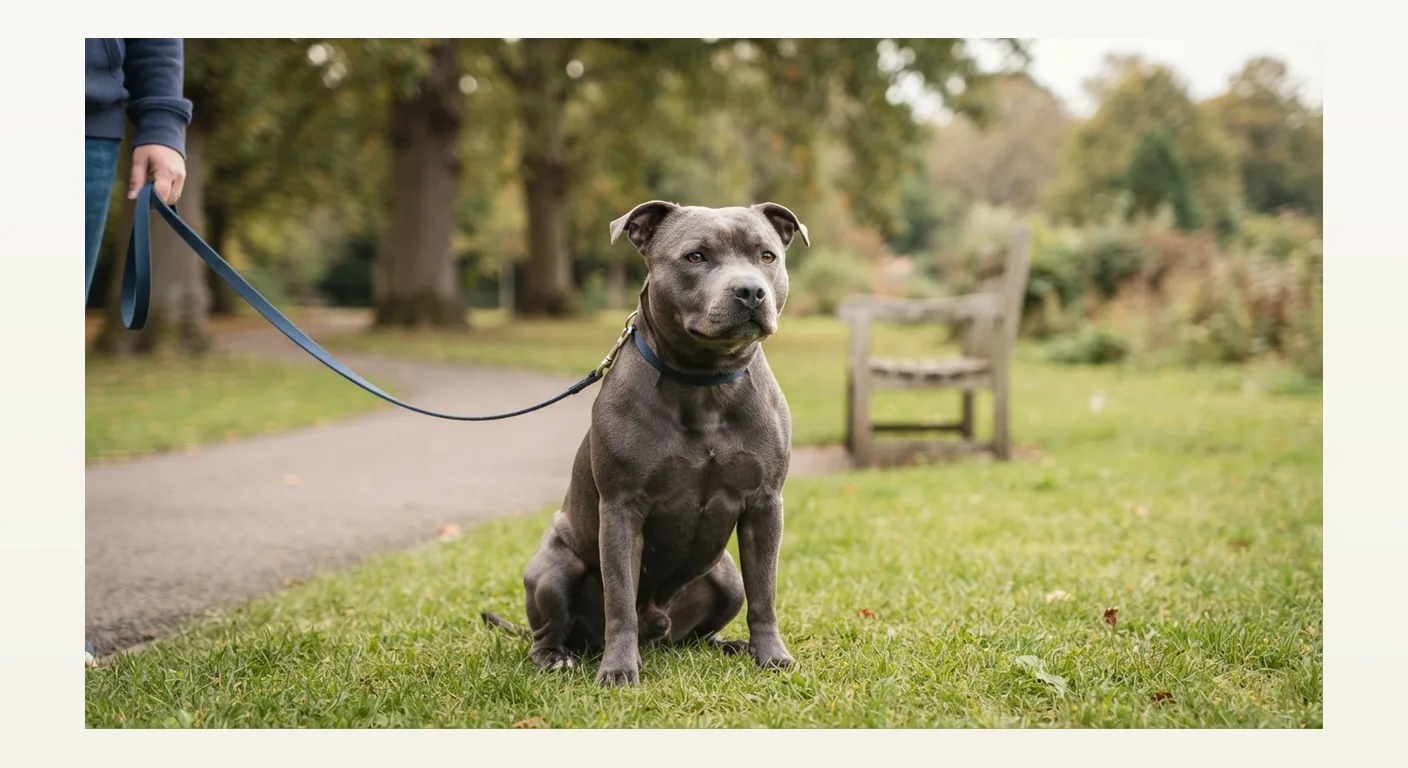
Two more notes from this section
Four Myths, and No Statistics
None of the four is answered with a figure, deliberately. We hold no dataset on dog bites or on breed behaviour, and borrowing one to win an argument would be the same fabrication in a friendlier direction.
Breed Note: The Best Answer Is Your Own Dog in Public
A well-socialised, well-trained Staffy out in public challenges more outdated perceptions in a year, and educates more people, than any paragraph here will.
Staffordshire Bull Terrier vs. American Bully: Know the Difference
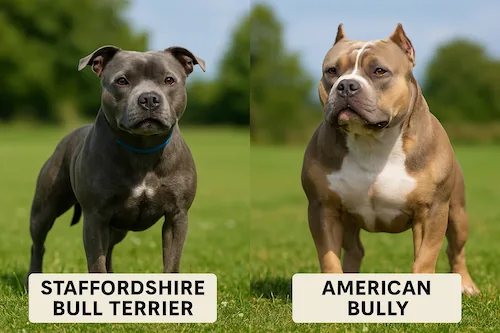
The difference between a Staffy and an American Bully matters in law: many Bully types, the XL among them, are banned in the UK.
A common point of confusion, particularly in the UK, is the distinction between the Staffordshire Bull Terrier and the American Bully. While they might share some superficial resemblances due to their common ancestry in bull and terrier types, they are distinct breeds with different characteristics, temperaments, and, crucially, legal statuses in the UK.
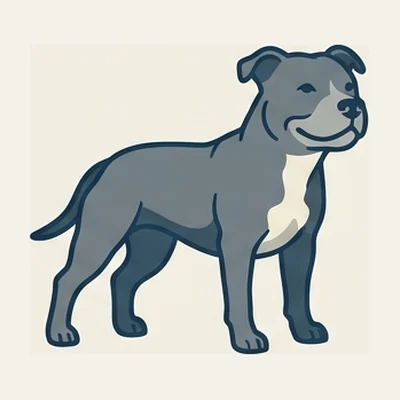
Staffordshire Bull Terrier (Staffy)
A UK breed, made in nineteenth-century England and written into a standard by the registry. 14 to 16 inches (35 to 41 cm) at the shoulder, 11 to 17 kg (24 to 38 lbs), males generally at the higher end. Not on the government's list of banned dog types.
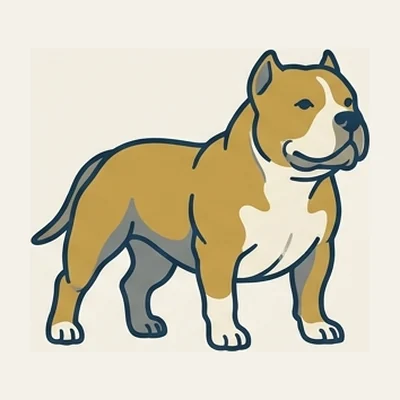
American Bully
A US type, developed in the 1990s out of American Pit Bull Terriers, American Staffordshire Terriers and other bulldog types. Not recognised by the registry as a breed, and recognised instead by clubs of its own. Because no single standard sits behind it, size and build vary widely, which is why no measurement for it appears here.

Why the Difference Matters Here
Because the law treats the two differently. Many American Bully types, the XL in particular, are banned in the UK under the Dangerous Dogs Act 1991. A banned dog is identified by type rather than by paperwork, so what a dog is called matters far less than what it is.

What to Be Wary Of
An advert offering an oversized Staffy, an XL Staffy or a Staffy cross. The breed does not come in an oversized version, and the table higher up this page is the whole of the range. Walk away, and go and look at dogs whose parents and papers you can see. See the registered Staffordshire Bull Terrier puppies we have here if you would rather compare against real dogs than against a description.
Three more notes from this section
The Difference Is Legal Before It Is Cosmetic
Getting this wrong is not an embarrassment about pedigree, it is a dog seized. That is why this guide carries the comparison at all.
The Ancestry Is Shared, Which Is Why the Confusion Exists
Both trace back to bull and terrier crosses, so the family resemblance is real. A shared great-grandparent is not a shared legal status.
Breed Note: Ask to See Both Parents
Two dogs in front of you settle a question that a photograph and a word never will.
Finding Your Forever Staffy: Choosing an Ethical Breeder in the UK
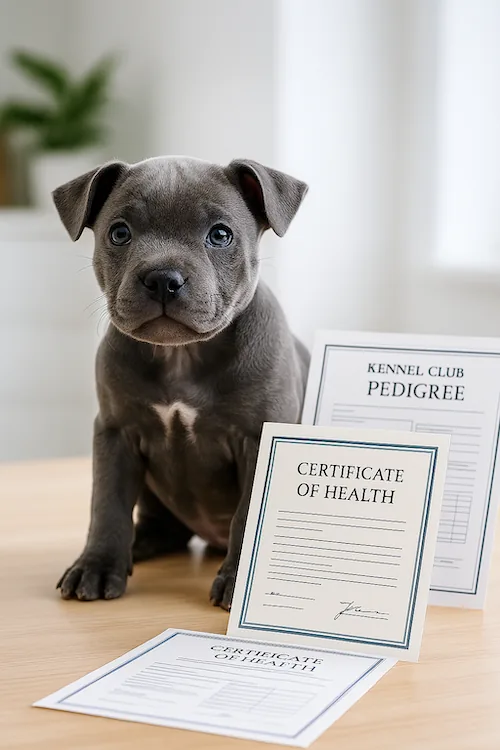
When ready to buy a Staffordshire Bull Terrier puppy, the most crucial step is finding an ethical Staffy breeder UK. A responsible breeder prioritises health, temperament, and the welfare of their dogs above all else. Here’s how to find Staffy breeders who health test, like BlueStaffyUK:

They Name Both Tests on Both Parents
Both parents, both DNA tests, named against each dog rather than a sentence on a website. A breeder who says the parents are clear and cannot produce the paper has told you nothing at all. Our two tests are on the health page, named against the dogs they belong to. The paper itself is what we hold back from the internet: contact us and you can read it, but a certificate published online can be copied onto any dog.

They Show You the Registration
The original registration papers, with the names on them matching the dogs in front of you. A KC-registered litter has a record of parentage behind it, and that is all registration is: it certifies who the parents were, tests nothing and grades nothing. A breeder quoting registration and health screening in one breath is answering a question you did not ask. The Kennel Club, the registry our litters are registered with, holds the register those papers come from.

The Puppies Are Raised in A Home
In a house, underfoot, with the washing machine and the doorbell and people going past. A puppy raised in an outbuilding meets the world for the first time in the back of your car. Ask where the litter sleeps, and ask to see it there.

They Are There After You Leave
Advice for the life of the dog, and a puppy taken back if you ever cannot keep it. That second half is the one buyers forget to ask about and the one that says the most.

They Ask You Questions Too
A breeder who does not interview you is not choosing where the puppy goes, which means the only test being applied is whether your money clears. Our own answers to those five are on the home page, and the fifth is the one we would rather be held to than any of the others.
Three more notes from this section
Five Tests You Can Use on Us
Take these five questions to every breeder you meet, this one included.
A Refusal Is an Answer
Nobody is obliged to show you anything. What somebody declines to show, once you have asked politely, is the most useful thing you will learn that afternoon.
Breed Note: Bring the Five With You
Written down and in order, because a checklist is hard to recall with a puppy in your lap.
The temperament section, from the other side
What One Family Says About the Temperament
We couldn’t be happier with our beautiful blue Staffy from BlueStaffyUK! From the first enquiry to bringing her home, the process was seamless and incredibly professional. She’s got the most wonderful temperament – playful, loving, and fantastic with our kids. It’s clear she was raised with so much care and early socialisation. She truly is the heart of our family!
Everything above about how this breed behaves is a breeder describing their own dogs. One family in Manchester, named, describing theirs, is a different kind of sentence.
The Staffordshire Bull Terriers We Are Raising Now
A guide to a breed ends better on actual dogs.
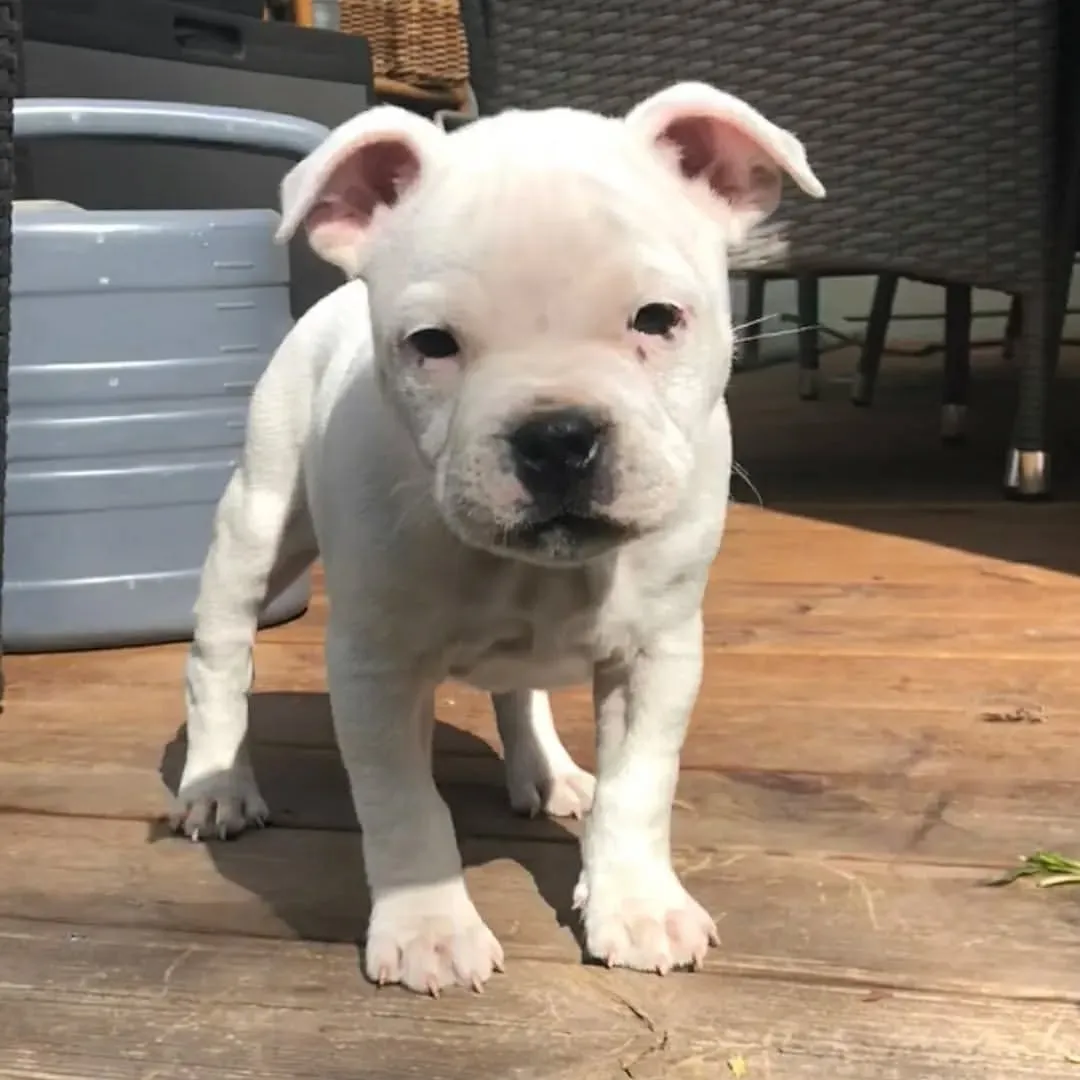
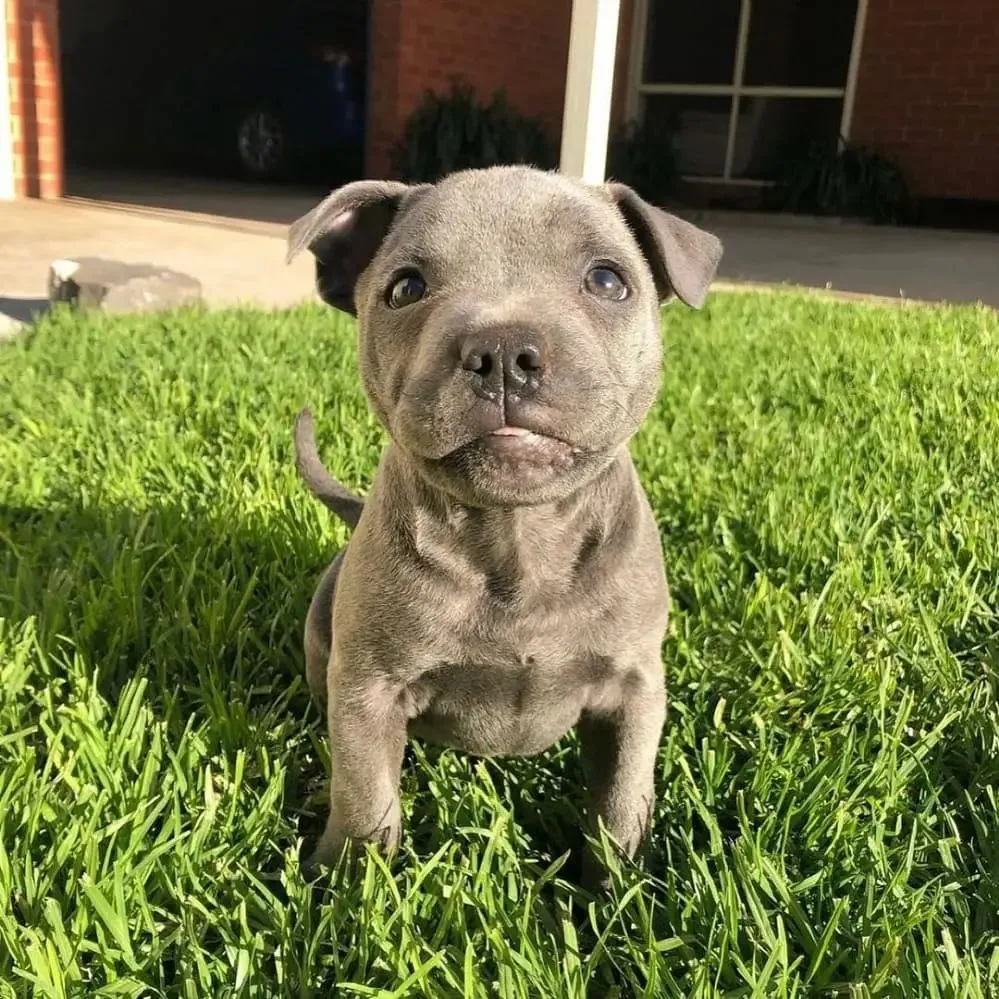
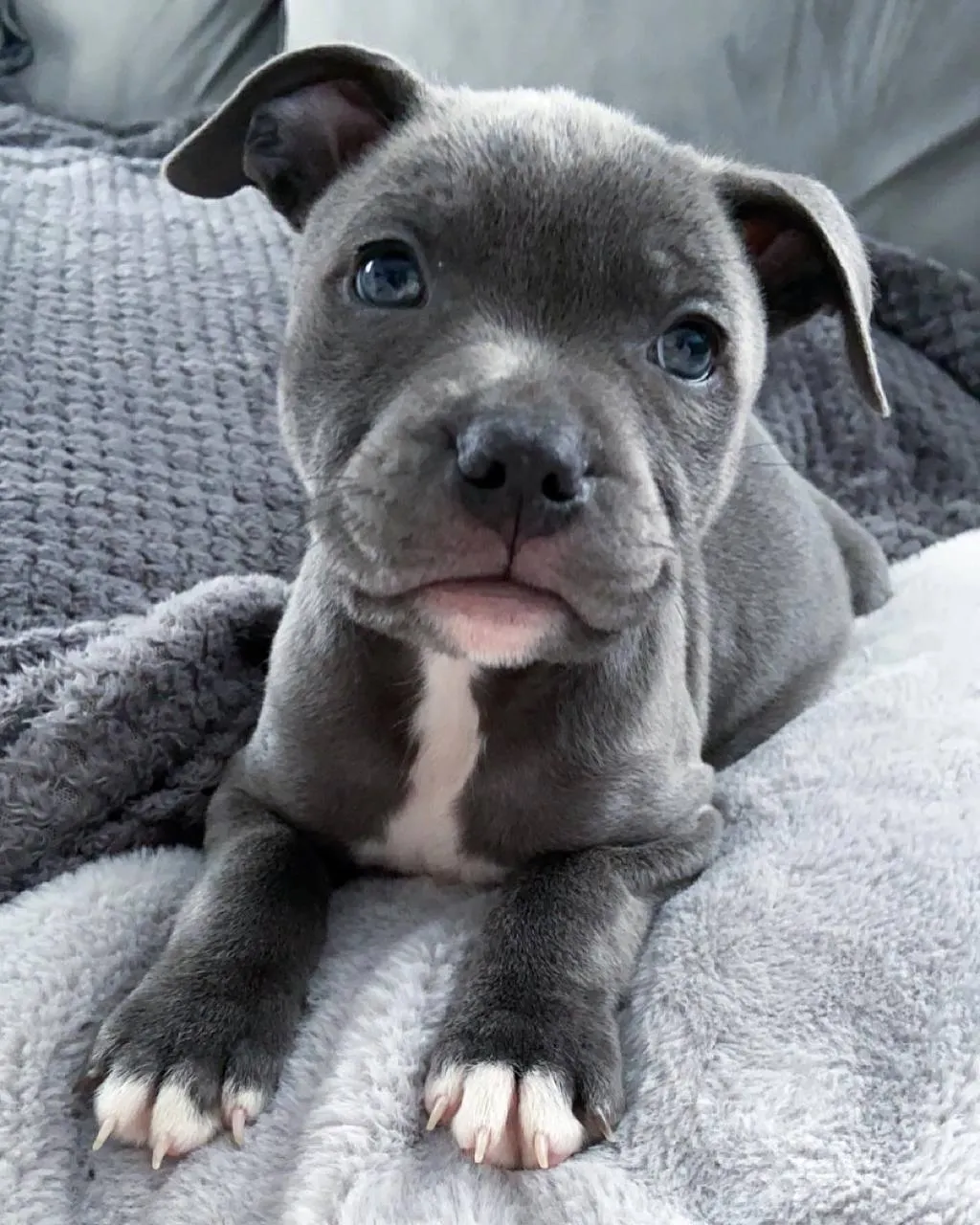
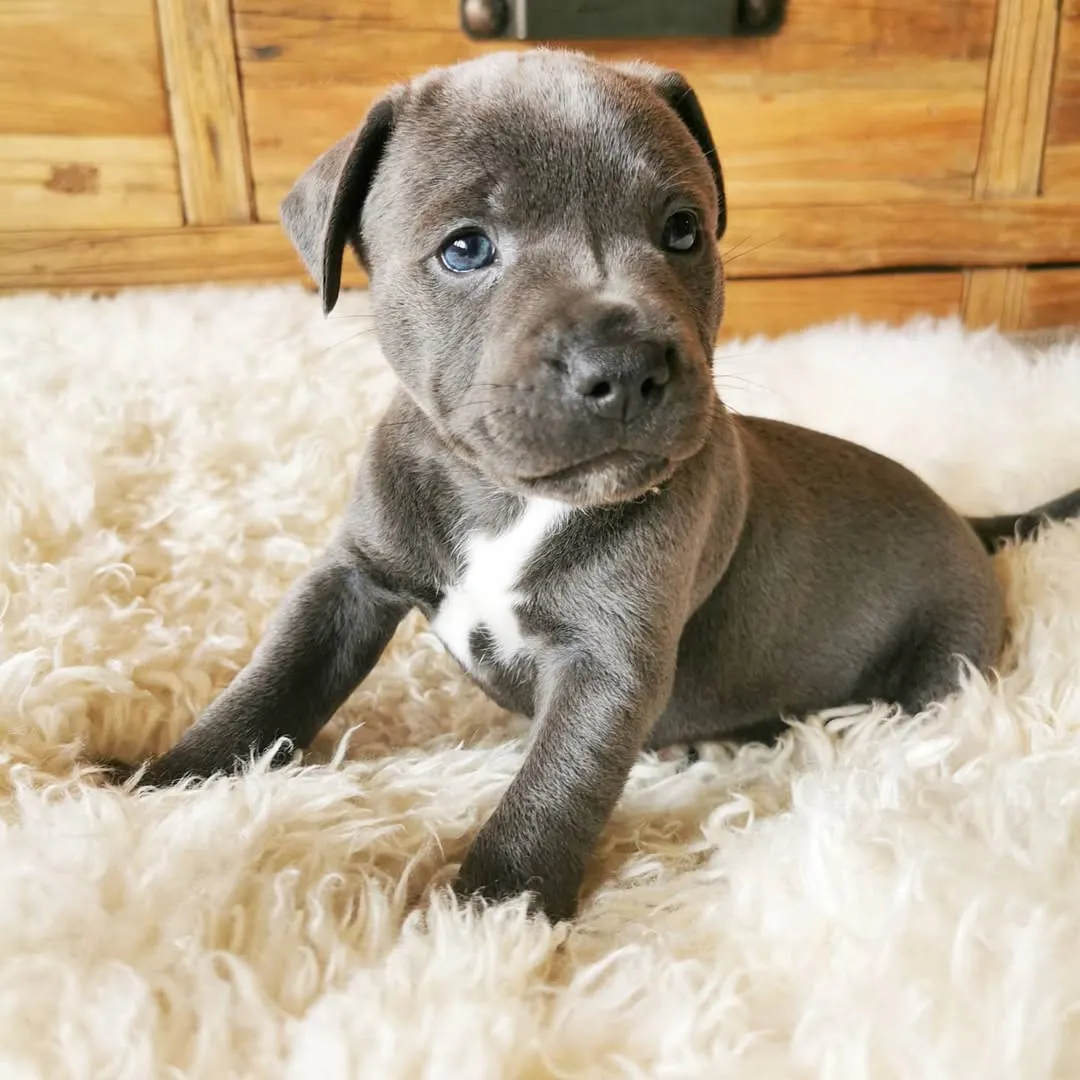
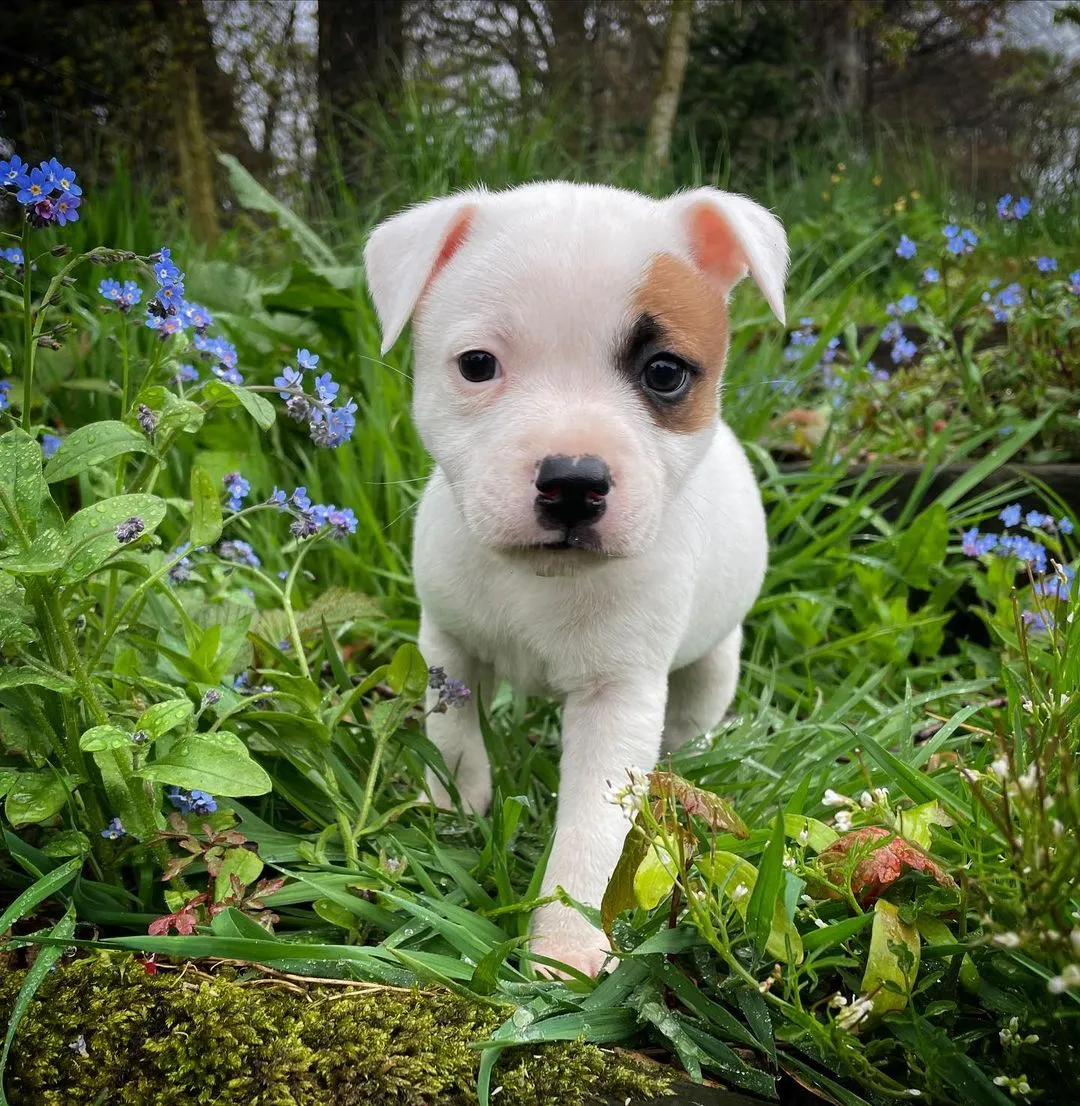
what a puppy costs and what is included sets the deposit and the delivery bands out in one place.
Blue Staffy FAQs: Quick Answers From Our Breed Guide
Need fast facts about Staffies? These frequently asked questions are drawn directly from our trusted UK Blue Staffy Breed Guide to help you make the right choice with confidence.
Eight of these nine are in the words they were put to us, and one, whether the breed is banned, is ours. Every answer restates something set out above rather than adding to it.
Is the Staffordshire Bull Terrier a Banned Breed in the UK?
No. The Staffordshire Bull Terrier is not a banned breed: it is not on the government’s list of dog types banned under the Dangerous Dogs Act 1991. A landlord or housing association may still restrict the breed, so ask for the pet policy in writing before you sign.
Are Staffordshire Bull Terriers Good for First-Time Dog Owners?
Yes, with commitment to early socialisation and consistent positive reinforcement training, Staffordshire Bull Terriers can be excellent companions for first-time owners. Their eagerness to please and people-oriented nature make them highly trainable. Our UK Staffordshire Bull Terrier care tips can help guide you.
How Much Exercise Does a Staffordshire Bull Terrier Need Daily?
Staffies are energetic and require at least 1 hour of vigorous exercise daily, ideally split into two sessions. This can include brisk walks, playtime, and mental stimulation. Regular exercise is crucial for their physical and mental Blue Staffy health .
Can Staffordshire Bull Terriers Live in Flats in the UK?
Yes, Staffordshire Bull Terriers can adapt well to flat living, provided they receive sufficient daily exercise and mental stimulation. Their moderate size and people-focused nature mean they do not necessarily require a large garden, as long as their outdoor needs are met with regular walks and park visits.
Do Staffies Get Along With Children and Other Pets?
Staffies are affectionate dogs. With careful and early socialisation with other pets , they can coexist peacefully. Supervision is always recommended, especially with young children or new pet introductions.
What Are the Downsides of Staffies?
Like any breed, Staffies have potential downsides. They can be strong-willed and require consistent training and socialization from a young age. Due to their history, they can have a prey drive, so early socialization with other animals is crucial. Responsible ownership and understanding the breed’s needs are key.
Can Staffies Be Left Alone for 8 Hours?
While adult Staffies can learn to tolerate being left alone for reasonable periods, consistently leaving any dog alone for 8 hours or more is generally not recommended. Staffies thrive on companionship and can become bored or anxious if left alone for too long. Gradual acclimatization and providing plenty of mental and physical stimulation are important.
Is a Male or Female Staffy Better?
The “better” sex depends entirely on individual preferences and lifestyle. Male Staffies can sometimes be more boisterous and overtly affectionate, while females may be slightly more independent. However, temperament is largely influenced by training, socialization, and individual personality, not just sex.
Do Staffies Get Attached to One Person?
Staffordshire Bull Terriers are known for forming strong bonds with their families and can be particularly devoted to their primary caregiver. However, with proper socialization, they can be affectionate with all members of the household.
Three more notes from this section
Every Answer Points Back Up the Page
Each answer here has a full section above it, so nothing important sits only inside a fold.
Why Nine Questions, Not Ten
The tenth asked what most often kills a Staffy. We hold no figure on that we could stand behind, so we leave it unanswered rather than guess.
Breed Note: Ask the One That Is Not Here
No list of answers describes your house and your week, and that is usually what the answer turns on.
Begin Your Blue Staffy Adventure Today
The Staffordshire Bull Terrier is a decision you won’t regret. They are exceptional companions who offer unconditional love and boundless energy. We hope this Staffordshire Bull Terrier guide UK has provided you with valuable Blue Staffy breed information to aid your decision.

The True Cost of a Staffy: What to Expect Financially
Bringing a Staffordshire Bull Terrier into your life is a significant commitment, and understanding the financial aspects is crucial for responsible ownership. While the love they give is priceless, owning a Staffy does come with ongoing expenses. Being prepared ensures you can provide the best possible life for your loyal companion.
Initial Costs
Roman, Byrd and Ince are £1,500; Vennie, Christa and Cheryl are £1,700. A deposit of £500 holds one dog by name, up to 70% refundable if you change your mind up to 1 day before collection or delivery. Those are the only purchase figures this site prints. We print no running-cost estimate: we have not worked one out ourselves, and your vet and insurer will price your own dog.

Getting A Puppy Home
Collection in Carlisle, or UK home delivery by DEFRA-approved transport, priced by distance at £200 to £350. See the puppies we are raising now and you will know which dog you are asking about before you ask.

Write to Us
Write to us with the question this guide did not answer — that is what a guide is for, and the questions people send are what the next version of it gets written from. The form at the foot of this page goes straight to Lisa Bright, who reads it herself, 24 hours a day, between feeds; there is no number on the site because there is not one to give yet.
Three more notes from this section
A Guide That Names Its Own Price
A breed guide that never says what a puppy costs sends a reader who has just decided straight back to a search engine, which serves nobody.
A Message Is Not A Commitment
Writing joins no queue and holds no dog. A puppy is reserved when a deposit is placed against its name, and not a moment sooner.
Breed Note: Tell Us About the Week, Not Just the Dog
Who is home, and when, is what decides whether this breed suits you. It is our first question.