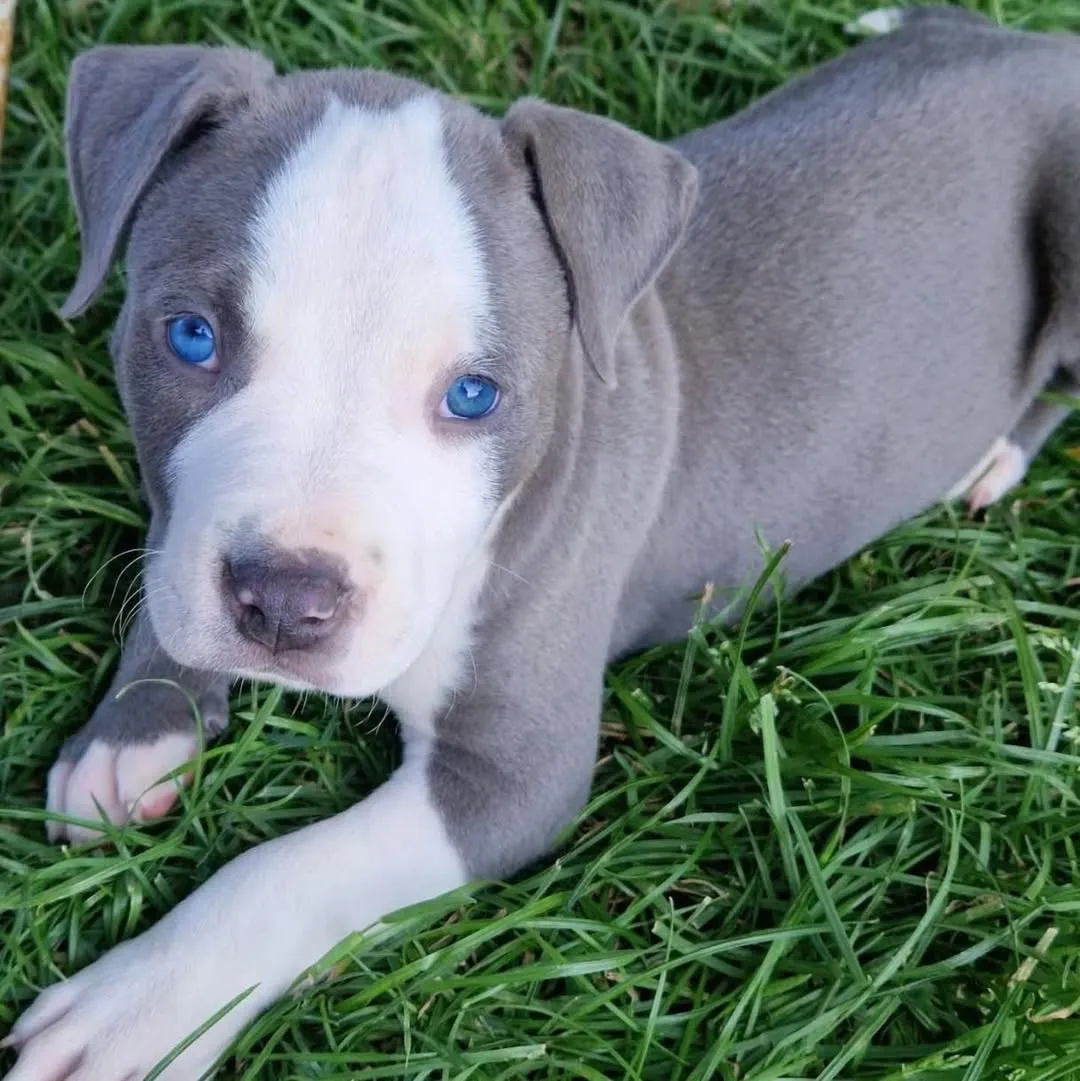
Roman Boy
Blue and white Available £1,500
Our blue-and-white boy, happiest stretched out on the grass.
- Vet-signed health card
- Raised in our home
UK home delivery £200–£350 by distance, or collect in Carlisle
Reserve Roman £500 deposit reserves him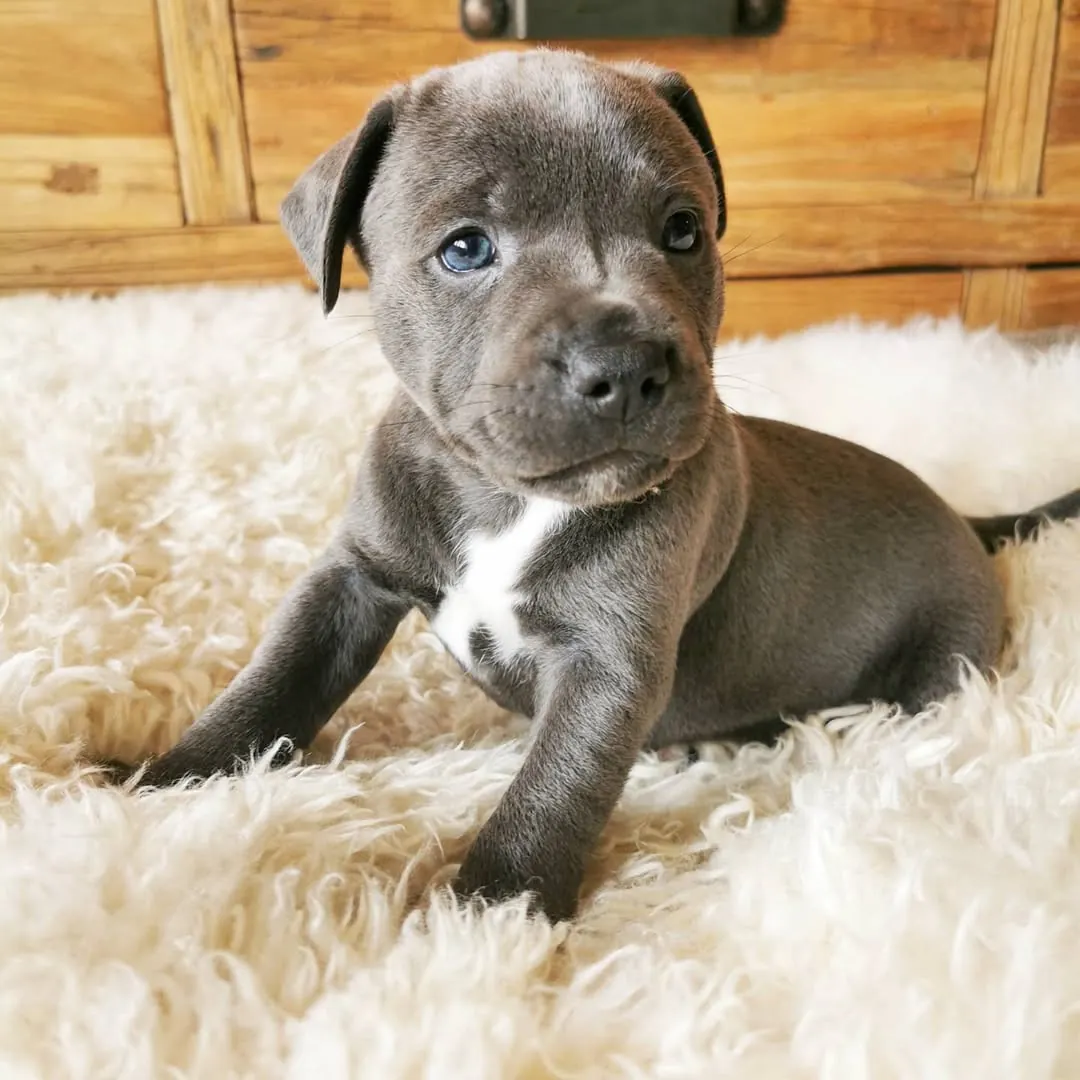
One breed, two coatsCarlisle, Cumbria
I'm Lisa Bright. I breed blues, and this is where a black coat differs from ours and where it never does.
A blue and black Staffy are one breed in two coats, and the choice is smaller than most adverts make it look. Blue or black Staffordshire Bull Terrier, the dog underneath is the same: same standard, same temperament, same tests for the parents.
One gene pair turns black pigment to slate, and that changes the coat, the nose and one named skin condition. Christa, above, is one of my blue girls.
The short answer
The one whose coat you love. A blue and a black are the same breed, judged by the same standard, with the same dog underneath. Blue is black pigment diluted by one recessive gene pair, and it changes the coat, the shade of nose and eye rims, and one named skin condition.

I breed blues and say so plainly, then set out where a black dog comes out ahead, so the choice stays yours and not my preference.
Blue Staffy vs black Staffy, row by row, is in the table below. Blue black Staffy in an advert can mean either coat. No coat tells you whether a pup is an English or an American Staffy; these do:
Our litters are raised in our home, never in kennels, and black pups have come from my dogs before, so I know both coats first hand.
Because I breed blues by choice and say so. In my own words: “We breed blue Staffy by choice because, grandmum and granddad had two, grew up loving blue Staffies so choose to breed them.” Black pups have come from my dogs before, and some of them carry black.
Why Lisa breeds blues, and the family dogs that started it are on the About page.
The litter and the prices, in figures
Key numbers
FactFrom the breed standard, the parents' tests and the price list
FactBreed taxonomy and the 2007 melanophilin study
Yes. A blue is a black Staffy whose pigment is diluted: it carries two copies of a recessive dilute allele, linked to the melanophilin gene, MLPH, and those two copies turn black pigment into slate blue. One copy alone changes nothing you can see.

Coat colour dilution needs two recessive copies, so a black parent of ours can hide one copy under its coat and still pass it on.
So the two coats are one breed of domestic dog, Canis familiaris, never two. The dilute gene works on the pigment in the hair and in the nose leather; the coat's length, the dog's build and its character come from the breed and the parents.
Researchers describe dilution as “a Mendelian autosomal recessive trait”, which in plain terms means a pup needs a dilute copy from each parent to come out blue.
Can a blue puppy come from parents that are not both blue? It can. A black dog may carry one dilute copy without showing it, so two black parents can have a blue pup, and a blue paired with a black carrier can have both colours in one litter.
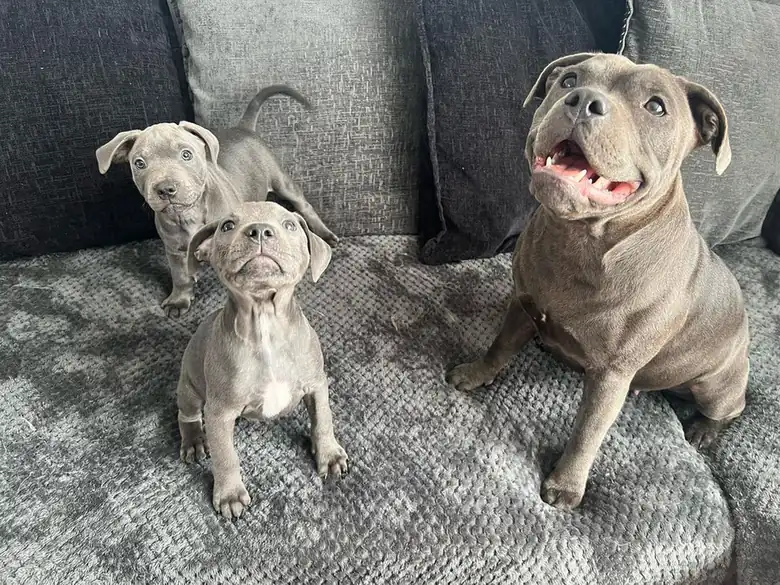
Maggie is blue, yet a blue pup can come from parents that are not both blue when each one carries a dilute copy.
Each pup takes one copy of the colour gene from each parent. A black parent can hide a dilute copy under its coat, and when two such parents both pass it on, that pup is blue while its littermates may be black.
Every pup draws its own pair, which is how one litter can hold both coats. Black pups have come from my dogs before, and some of them carry black. Which copies meet is chance; how a pup is raised plays no part in its colour.
Nothing you can see. A dog with one dilute copy and one full-colour copy looks black, because the full-colour copy is dominant. The hidden copy shows only when it meets another.
Picture a black dam with one hidden dilute copy, mated to a blue sire, who has two. Every pup gets a dilute copy from him for certain and either copy from her, so each pup is an even chance between black and blue. That is the arithmetic of the pairing, not a forecast for a real litter.
A 2007 study in the Journal of Heredity traced coat dilution in dogs to a change at the start of the MLPH gene, and it is the source of the quoted line above.
Yes. The Royal Kennel Club standard for the Staffordshire Bull Terrier lists “red, fawn, black, blue, or any one of these colours with white”, along with white on its own and any shade of brindle. A blue and a black stand side by side there as correct colours.
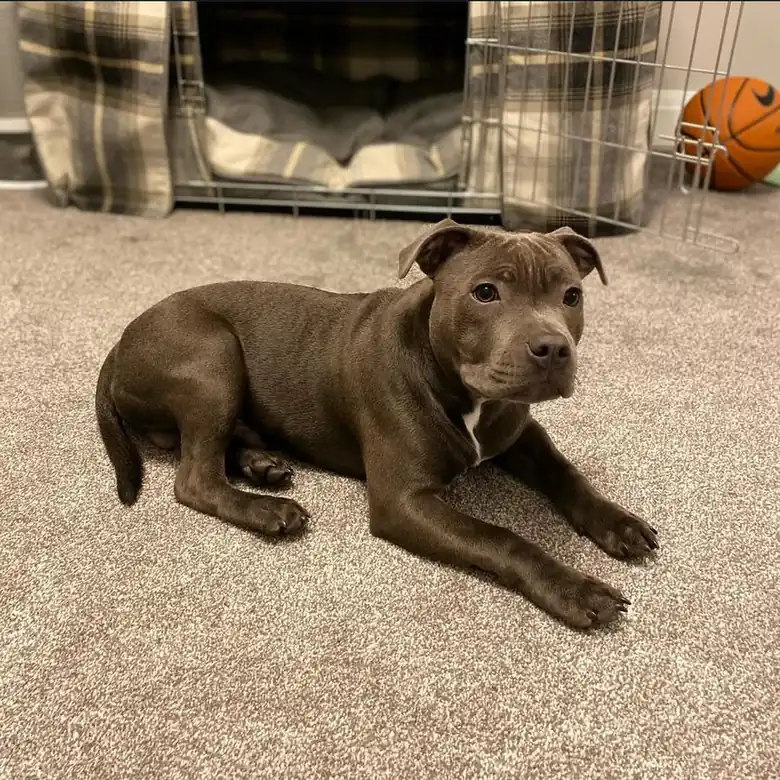
Blue is an accepted Staffy colour, so a judge reads Jones on the same build, head and movement as any black dog in the ring.
Neither coat is marked down for being what it is. A judge reads a blue and a black against the same build, head and movement, and the same coat clause: “smooth, short and close”.
Staffy colours change how the dog looks in the ring, never the standard it is measured by. Jones, our sire in the photo, is blue, and the standard would judge him in exactly the words it uses for a black dog.
The rest of the standard, coat to character, in our breed guide, sets out what this section leaves aside.

A Staffy can be completely black with no white at all, and we read that straight from the colour clause shown here.
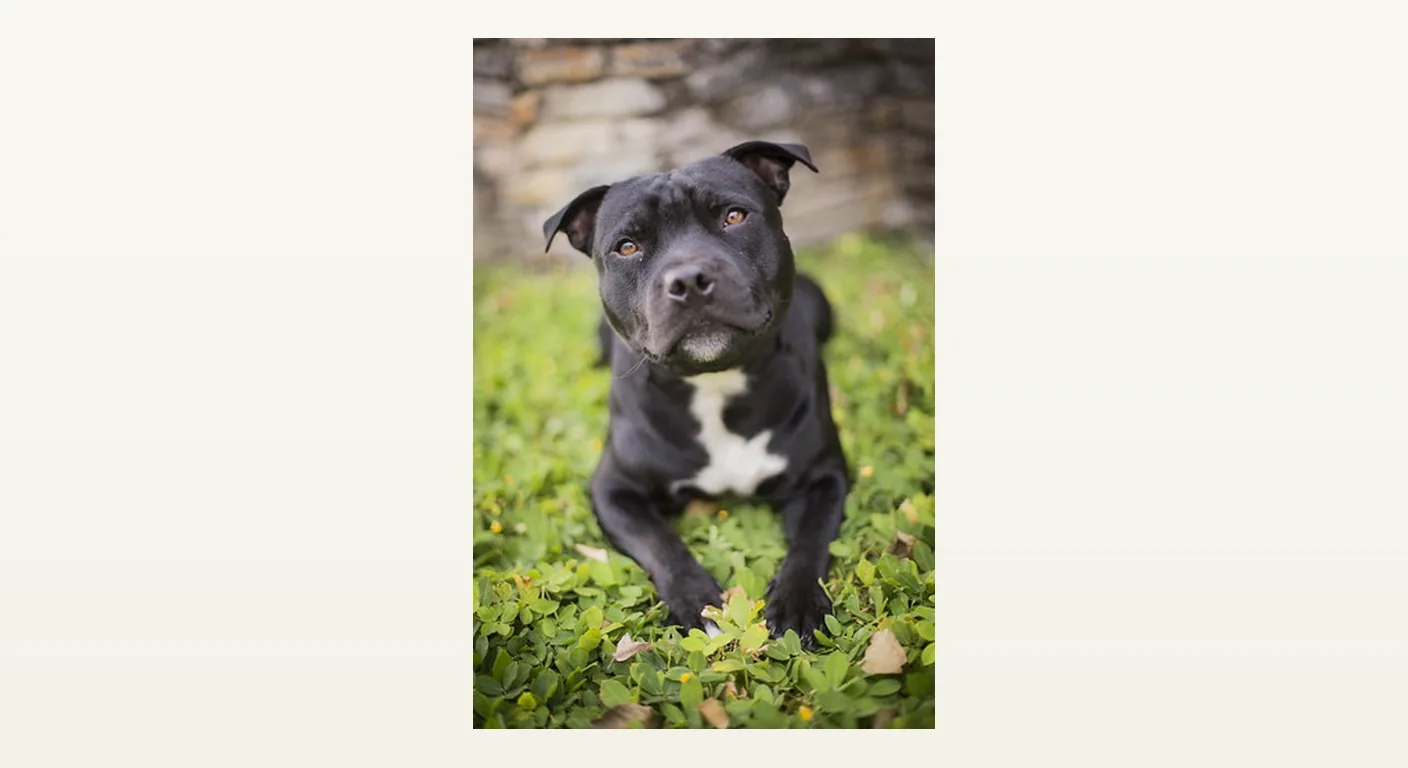
Yes. Can a Staffordshire Bull Terrier be completely black? It can: black is one of the colours the standard names outright, with no white required. A black dog with a white chest or white toes is correct too, under the “with white” wording, and so is a black brindle, which counts as a shade of brindle. What the standard turns away is a tan pattern on black.
The head clause reads “Nose black or as dark as possible in blue dogs”. For the eyes it asks “Dark preferred but may bear some relation to coat colour”, and for the rims simply “Eye rims dark”.
Black and tan, and liver. The standard calls any other colour, “including black and tan or liver”, unacceptable. Neither of them is a blue or a black.
The Royal Kennel Club breed standard is where every quoted line in this section comes from, read in full on the registry's own page.
FactRead from the Royal Kennel Club standard and this litter's records
Here is blue against black, row by row. Most rows read Equal, two read Differs, and one depends on you. The blue column is ours.

Most rows of our coat table read equal; we count only the shade, the nose and one skin condition as real differences between them.
| Row | Blue Staffy | Black Staffy | Edge |
|---|---|---|---|
| Breed | Staffordshire Bull Terrier | Staffordshire Bull Terrier | Equal |
| In the breed standard | Yes, listed (Royal Kennel Club) | Yes, listed (Royal Kennel Club) | Equal |
| Coat type | Smooth, short and close | Smooth, short and close | Equal |
| Nose | Black or as dark as possible in blue dogs | Black | Differs |
| Eye rims | Dark | Dark | Equal |
| Temperament | No source ties it to coat | No source ties it to coat | Equal |
| DNA tests for the parents | L-2-HGA and HC-HSF4, tests named only | L-2-HGA and HC-HSF4, tests named only | Equal |
| Colour dilution alopecia | Described in dilute dogs (2007 study); no figure | Not a dilute coat | Differs |
| Our puppies in this coat | Two in this litter | Zero in this litter | Depends on you |
| Price with us | By sex: £1,500 a boy, £1,700 a girl | By sex: £1,500 a boy, £1,700 a girl | Equal |
| Paperwork | The same folder: Kennel Club registration application form, vaccination records, microchipping details, written puppy purchase contract | The same folder: Kennel Club registration application form, vaccination records, microchipping details, written puppy purchase contract | Equal |
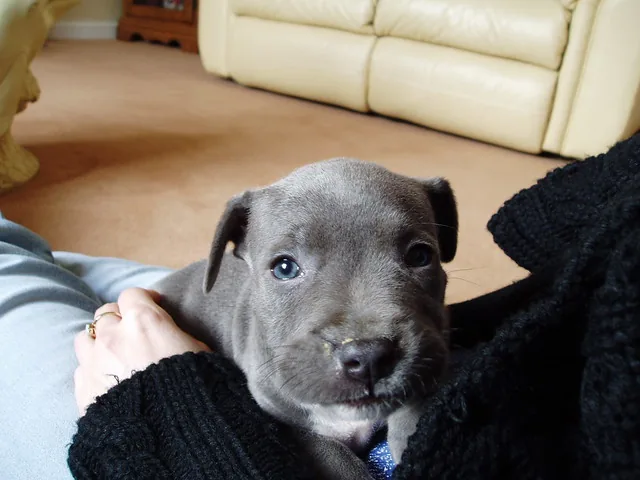
Look at the nose in daylight. A blue pup's coat reads slate or grey with a slate nose; a black pup's coat reads jet, and its nose is black.
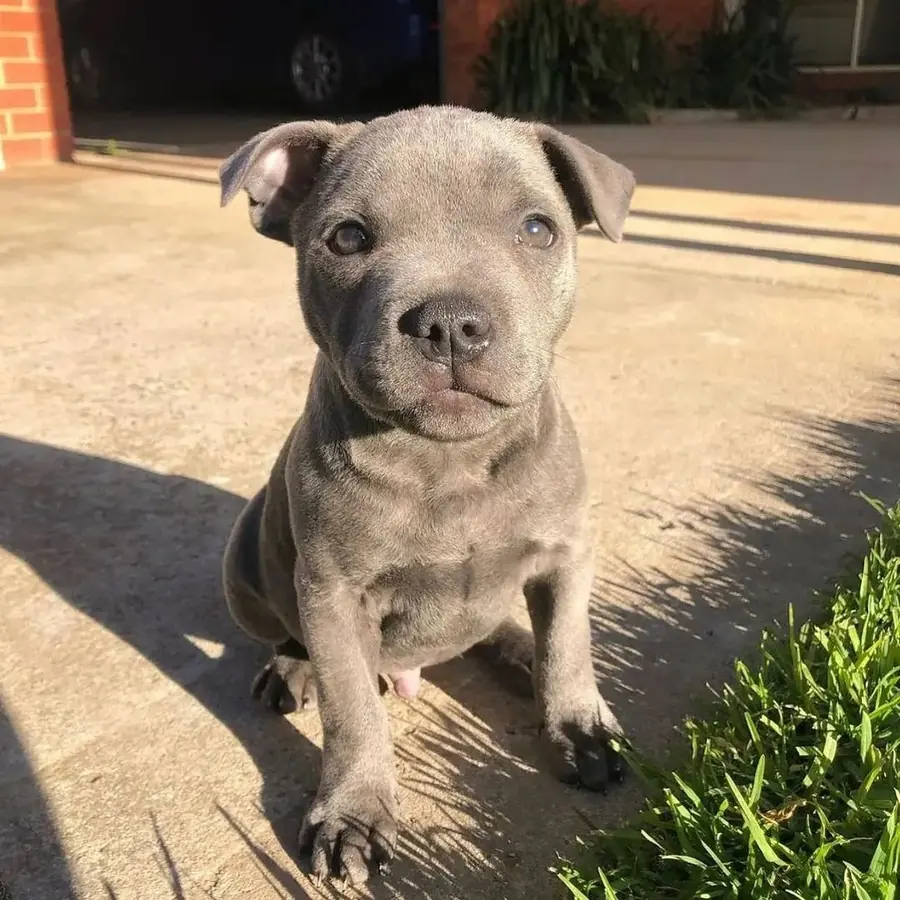
Look at the nose leather in daylight: Ince's is slate, and that is how we tell a blue pup from a black one at eight weeks old.
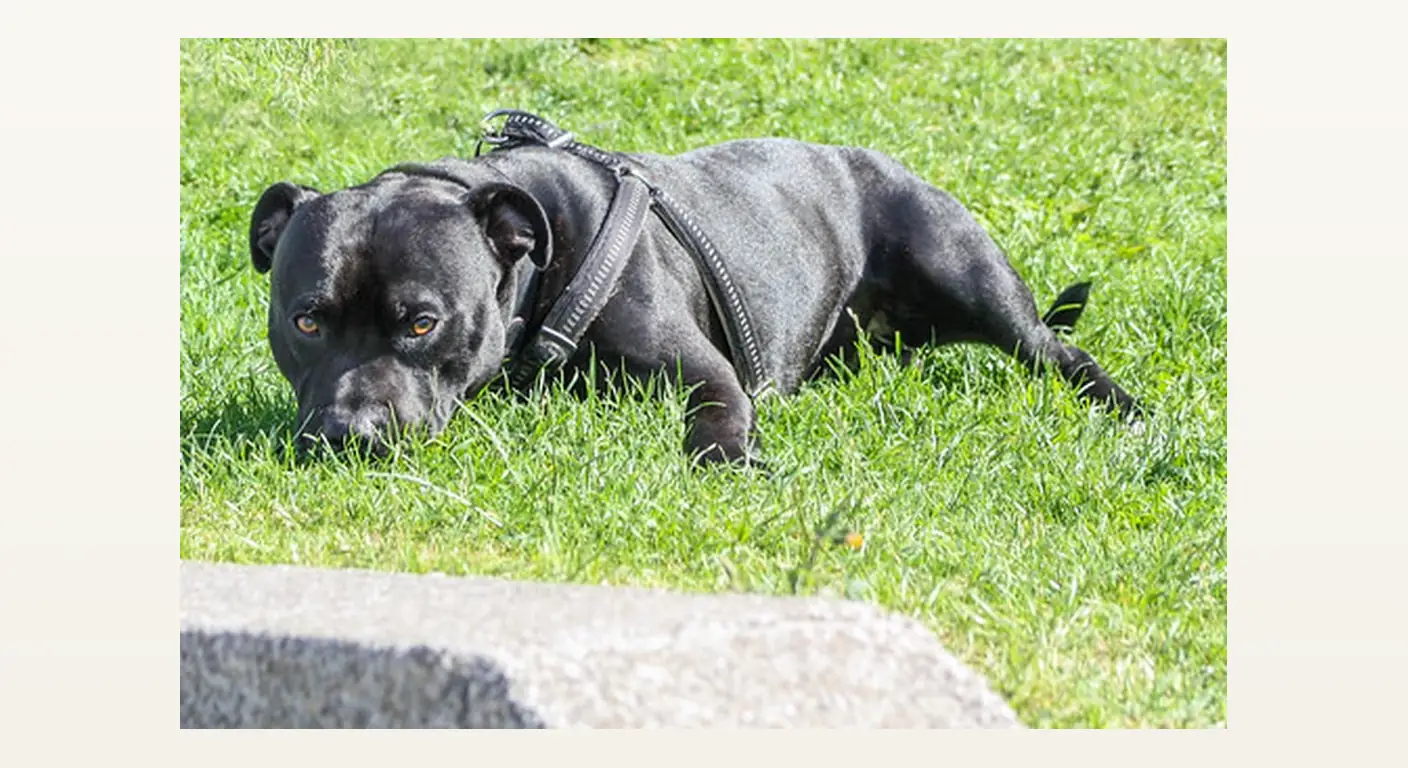
Strong sun is the fairest test we know: a jet coat stays dark right along the back, and the nose leather stays black, never slate.
Colour words in the breed standard give you the test: a black dog's nose is black, and a blue's is as dark as its dilute pigment allows. Check the nose leather first, then the coat along the back, in natural light, where a blue shows its grey and a black stays dark from every angle.
Indoor light and phone cameras flatten the difference. A blue pup photographed in a dim room can pass for black, and a black pup under a strong lamp can shine grey.
Ince, my blue boy in the photo, is sitting in sunlight, where the grey shows plainly. Eye colour will not settle it: the standard lets a dog's eye bear some relation to its coat colour, so the nose and coat are the surer guide.

Sellers write 'blue black' loosely for a dark blue, a black or a black brindle, so we suggest asking which coat the pup really has.
Nothing fixed. Sellers write it loosely, for a dark blue, for a black or for a black brindle, and the advert rarely says which; listings sites even run "blue black" as a search of its own. How we compare to generic classified puppy ads goes further than the coat. RSPCA advice on reading a puppy advert is worth reading before you message anyone.
Ask what colour each parent is. A blue pup needs a dilute copy from both sides, so a seller who really knows the parents can answer in one sentence.
A colour word costs nothing to type, and a photo can be of another pup. Treat "blue black" as a question to ask, never as the answer.
Ask any seller, us included, for the nose and the coat along the back in daylight. Someone with the pup beside them can show you in a minute.
FactThe 2007 melanophilin study and the two tests named, never a result
Not that any source shows: colour does not change which DNA tests a Staffy's parents need. One skin condition, colour dilution alopecia, is described in dogs with diluted coats, and we found no published figure for how often it affects blues.
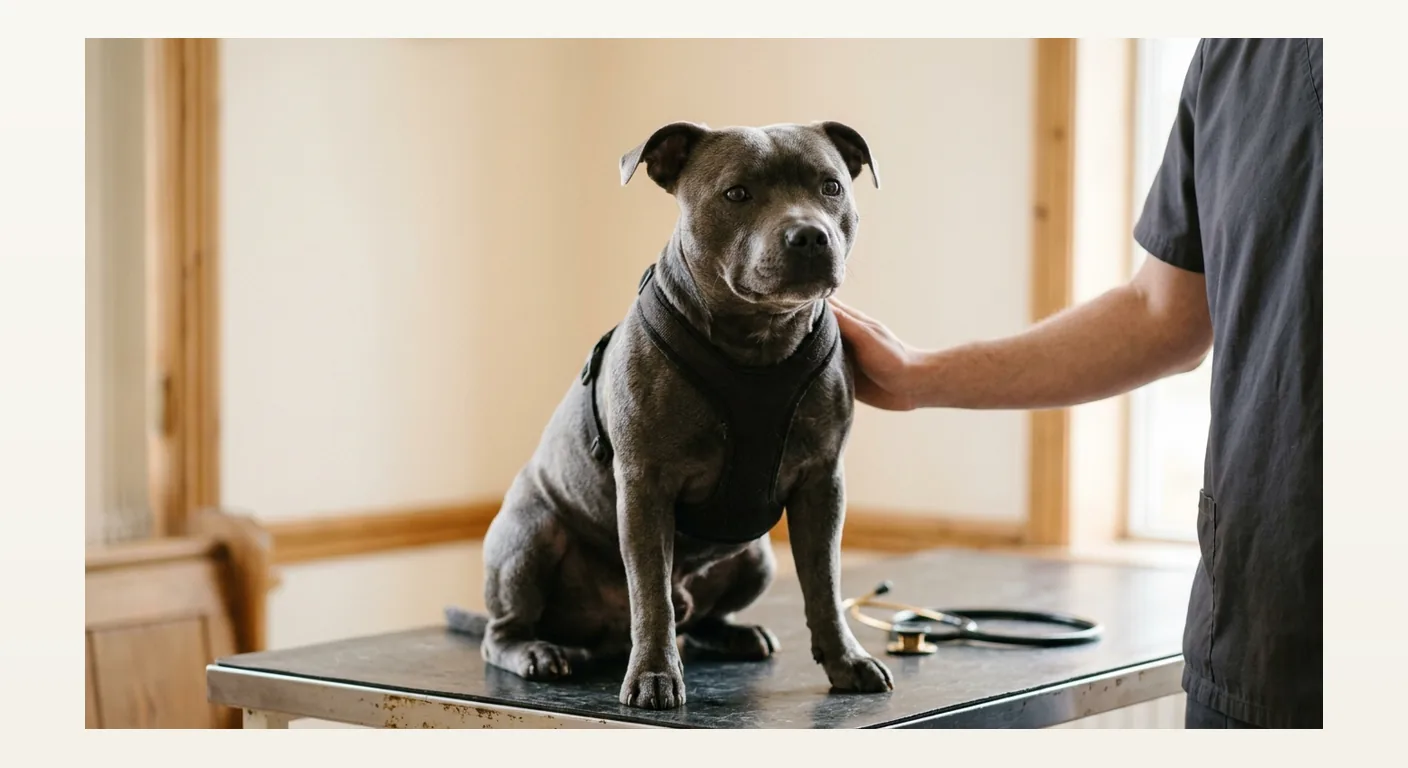
We found no source showing a blue coat brings more health problems than a black one for the conditions the breed is screened for.
So the answer has two halves. For the hereditary conditions the breed is screened for, a blue and a black stand in the same place, because a test result belongs to the parents, not to the coat.
For coat and skin there is one named condition, described in dilute coats, and that is the question worth asking about a blue. There is no allergy claim here either way, and no coat is called the healthier dog.

Whether blues are more prone to skin problems than other colours is unmeasured: we found no published figure, so we print none.
Colour dilution alopecia is hair loss, sometimes with skin inflammation that keeps coming back, seen in dogs whose coat colour is diluted. The 2007 study that traced dilution to the MLPH gene says dilution is “sometimes accompanied by hair loss and recurrent skin inflammation, the so-called color dilution alopecia”.
A black coat is not diluted, so it has nothing to ask on this score. That is why this one condition, and only this one, belongs in a comparison of coats.
On colour dilution alopecia alone, yes in the narrow sense: only a dilute dog can be affected, so the question applies to blues and not to blacks. Beyond it, no source I know of ties skin trouble to coat colour.
We looked for a count of how many blues develop the condition and found none we could cite. A page quoting a percentage owes you its source.
The quoted line comes from the abstract of the melanophilin study linked in the dilution section, published in the Journal of Heredity in 2007.
Two blue parents can only have blue pups, because each passes on a dilute copy. No source I know of ties that pairing to poorer health, so I make no claim either way; for health, what counts is which inherited conditions the parents were screened for.
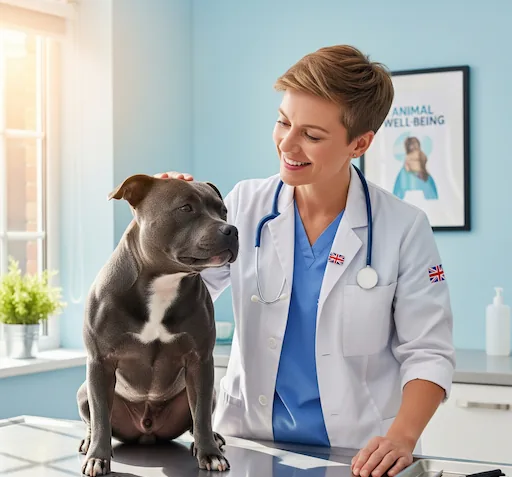
Jones and Maggie are DNA tested clear for L-2-HGA and HC-HSF4, which matters just as much for a slate pup as for a jet one.
The same two, blue or black: L-2-HGA and HC-HSF4. The first is a neurological disorder and the second an inherited cataract, and both are recessive, so only a pup carrying the faulty copy from its mother and its father can develop either.
Here, Jones and Maggie are DNA tested for L-2-HGA and HC-HSF4. Ask us, and the certificates for Maggie and Jones come to you.
Both parent DNA tests, set out on our health page, with what each one screens for. What an L-2-HGA result tells a buyer is explained by the Royal Kennel Club in its own words.
No. We have not seen colour dilution alopecia in any of our puppies or their parents. That is what I have seen in my own dogs, not a promise about any dog's future coat.
Whichever coat you choose, our two-year health guarantee covers health issues and birth defects for two years from the day your puppy comes home, in writing. Ask us for the full terms before you pay a deposit.
Coat loss shows on a dog, never on paper, so I can speak only for the dogs I have raised and the two parents I keep. If you ever see a bald patch on a pup from here, tell me straight away.
No. A blue is no more aggressive than a black, because coat colour is not temperament. Size and training follow the breed and the individual dog, and the standard sets one size for every colour.
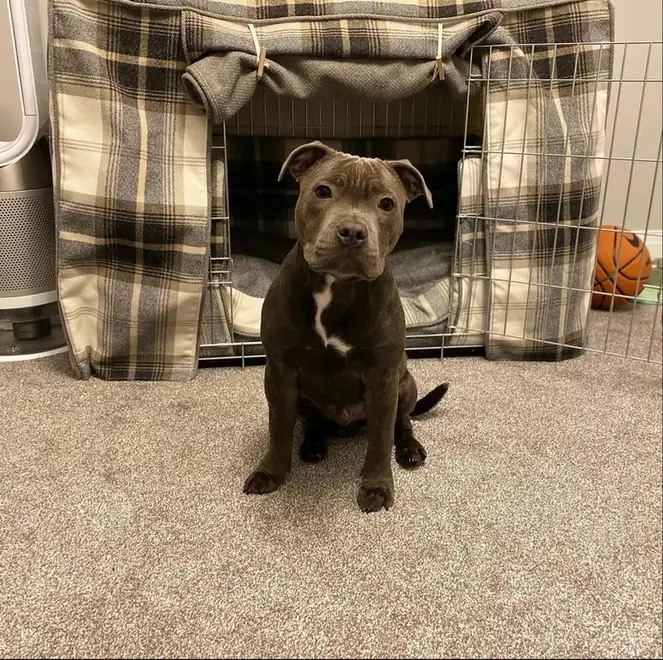
We cannot find any source showing colour can affect a Staffy's temperament, which is why we talk about Jones and Maggie before coats.
What shapes a Staffy's manner is its parents, the way it is raised and the work its owners put in. That is why I talk about Maggie and Jones before I talk about coats. Does colour affect a Staffy's temperament at all? No source I know of says it does, and I would not sell you a coat as a personality.
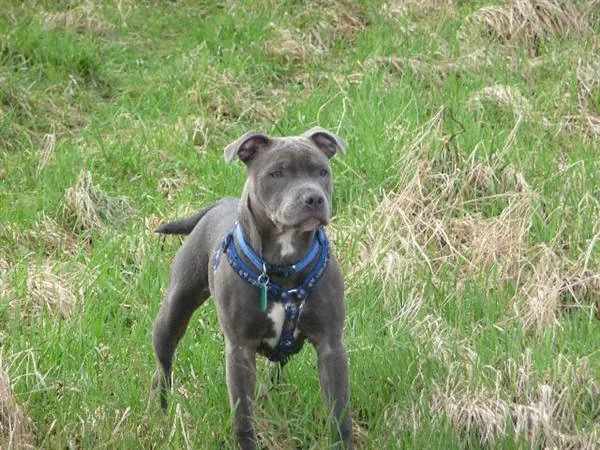
The bond grows from whoever feeds, walks and sits with the dog each evening, so we tell families it is the same for either shade.
Neither. A Staffy's attachment grows from the hours spent with it: who feeds it, walks it and sits with it in the evening. That is the same for a blue and a black.
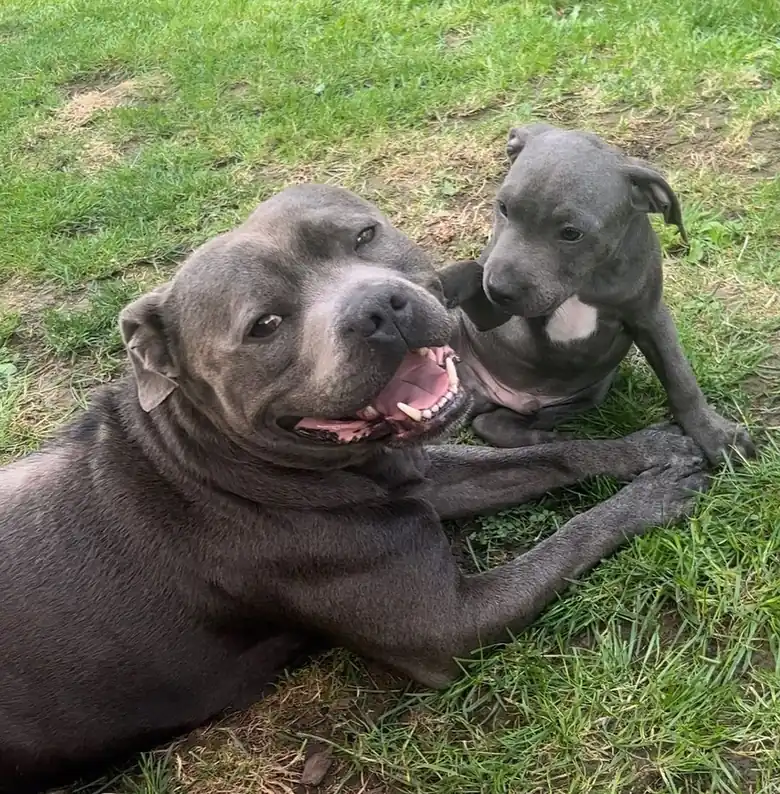
PDSA's guidance on daily exercise for the breed reads the same for a slate dog or a jet one, so we plan walks around age alone.
The same amount, because a Staffy's exercise follows its breed and its age, not its coat. PDSA's notes on caring for the breed set out how much daily exercise the breed needs, and the advice is the same for either colour.
The black coat's side
In two places, and both are real. The black nose the standard names first comes free with a black coat, while a blue has to get as close to it as its dilute pigment allows.
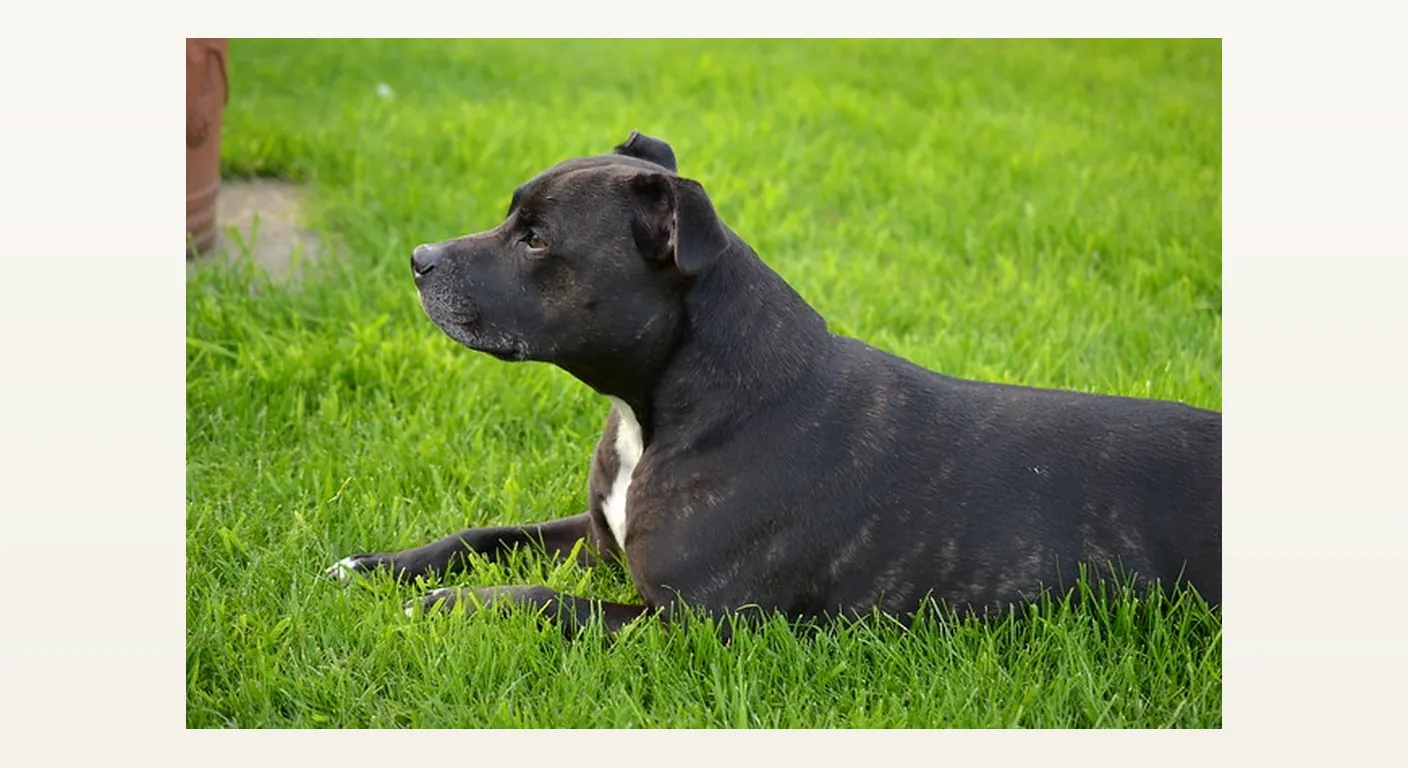
A brindle coat over black pigment still carries the black nose the standard names first, which is where this side comes out ahead.
Black Staffy owners also have no dilution question at all: colour dilution alopecia belongs to dilute coats, so there is nothing to ask about it. Black or brindle fits here too: the standard lists brindle in any shade, so a buyer who wants the darkest dog with the least to think about is right to look past our blues.
I will not claim a black is rarer, calmer, cheaper or healthier overall, because nothing I can cite says so.

The head clause asks for a black nose first and lets a slate dog be as dark as possible, so a jet dog meets it without trying.
Because black pigment is the standard's first choice, and a black dog carries it at full strength. The clause reads “Nose black”, then makes room for a blue with “or as dark as possible in blue dogs”. A blue's nose is slate by nature, so a breeder of blues aims for the darkest slate; a black dog meets the clause without trying.
Observed hereThis litter and its price list, as they stand
Everything but the coat. I'm Lisa Bright, and here in Carlisle the terms are the same for every pup we place, whatever its colour. A boy is £1,500 and a girl £1,700, so the price follows sex, never coat. A £500 deposit reserves your puppy, and it comes off the price; it is up to 70% refundable if you change your mind up to 1 day before collection or delivery.

Whichever coat you choose, the same written contract and the same health guarantee come with every pup.
You can read our written contract before you pay the deposit. Every pup comes with the two-year health guarantee. Collect yours from us in Carlisle, or it travels to you by DEFRA-approved transport, priced by distance, at £200–£350. How reserving a pup of either coat works with us is set out step by step on our buying page.
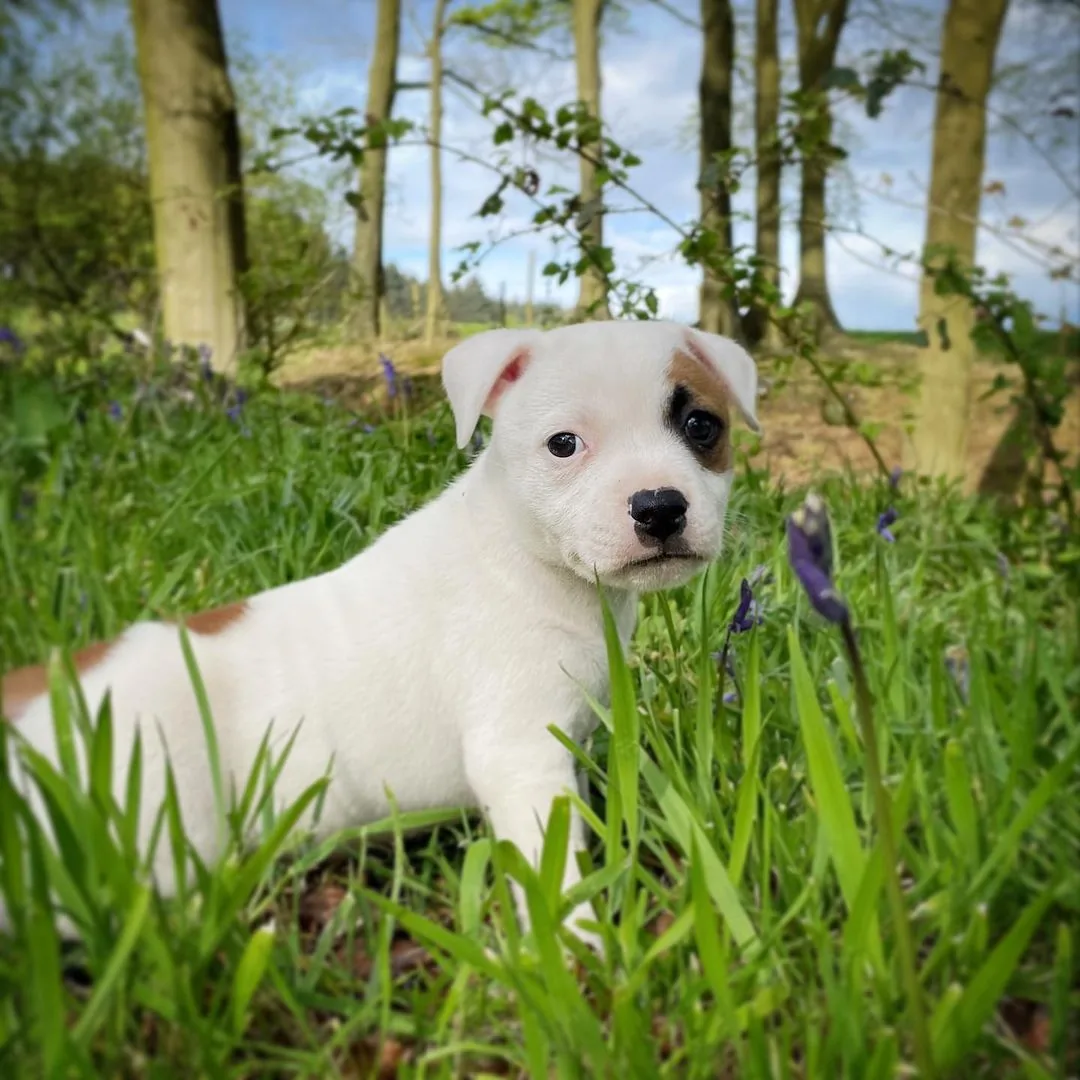
There is no black pup in this litter of 6: Cheryl is white with a tan eye patch, and the rest are blue, white, or blue and white.
No. There is no black pup in this litter. Roman is blue and white, Byrd white, Ince and Christa blue, Vennie blue with white chest, Cheryl white with tan eye patch. I keep no waiting list for a black pup and give no date for one. Who is in the litter today, coat by coat is always on our listing.
None of them fits both.
Roman Boy
Blue and white Available £1,500
Our blue-and-white boy, happiest stretched out on the grass.
UK home delivery £200–£350 by distance, or collect in Carlisle
Reserve Roman £500 deposit reserves him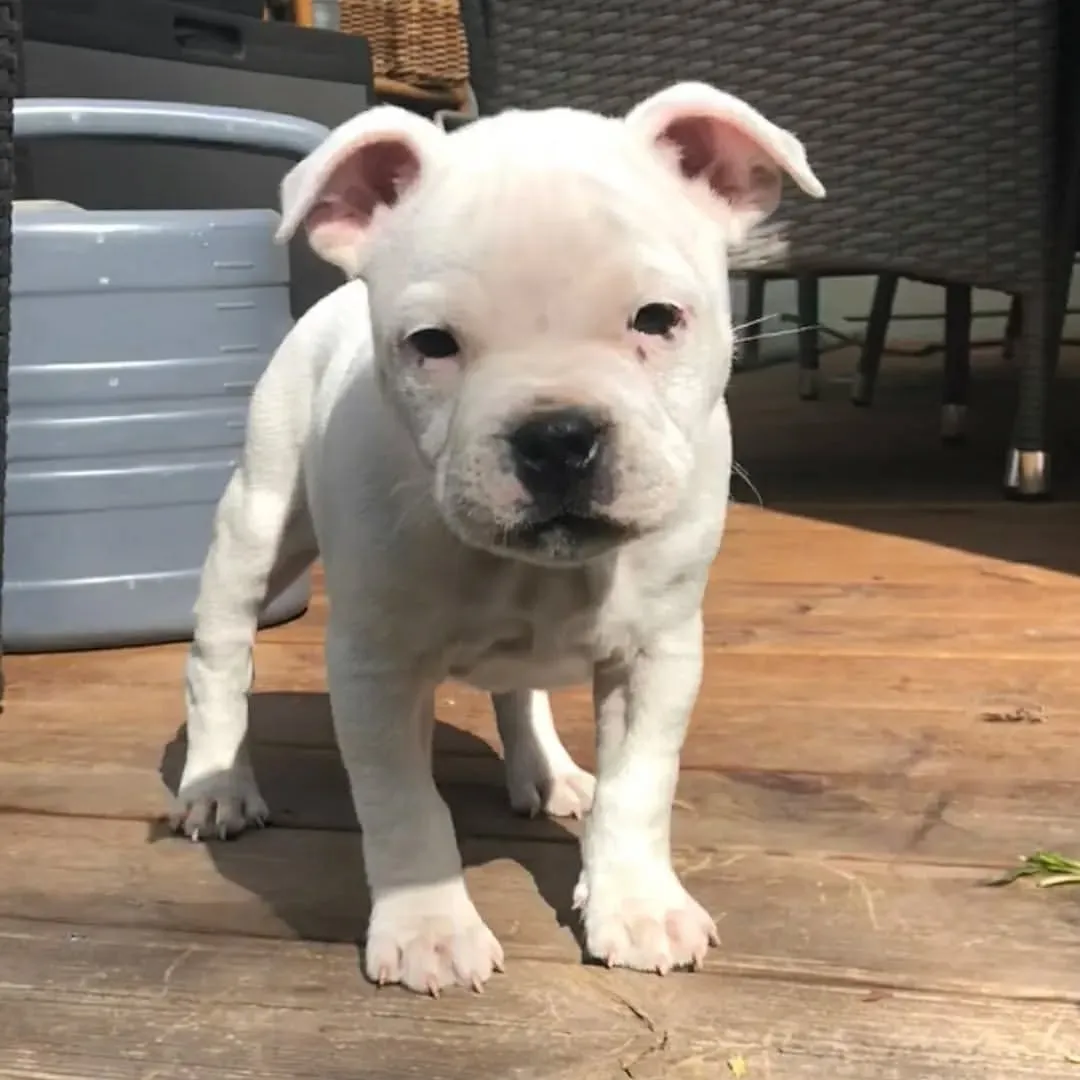
Byrd Boy
White Available £1,500
Our sturdy white boy, first to trot over and see who's come in.
UK home delivery £200–£350 by distance, or collect in Carlisle
Reserve Byrd £500 deposit reserves him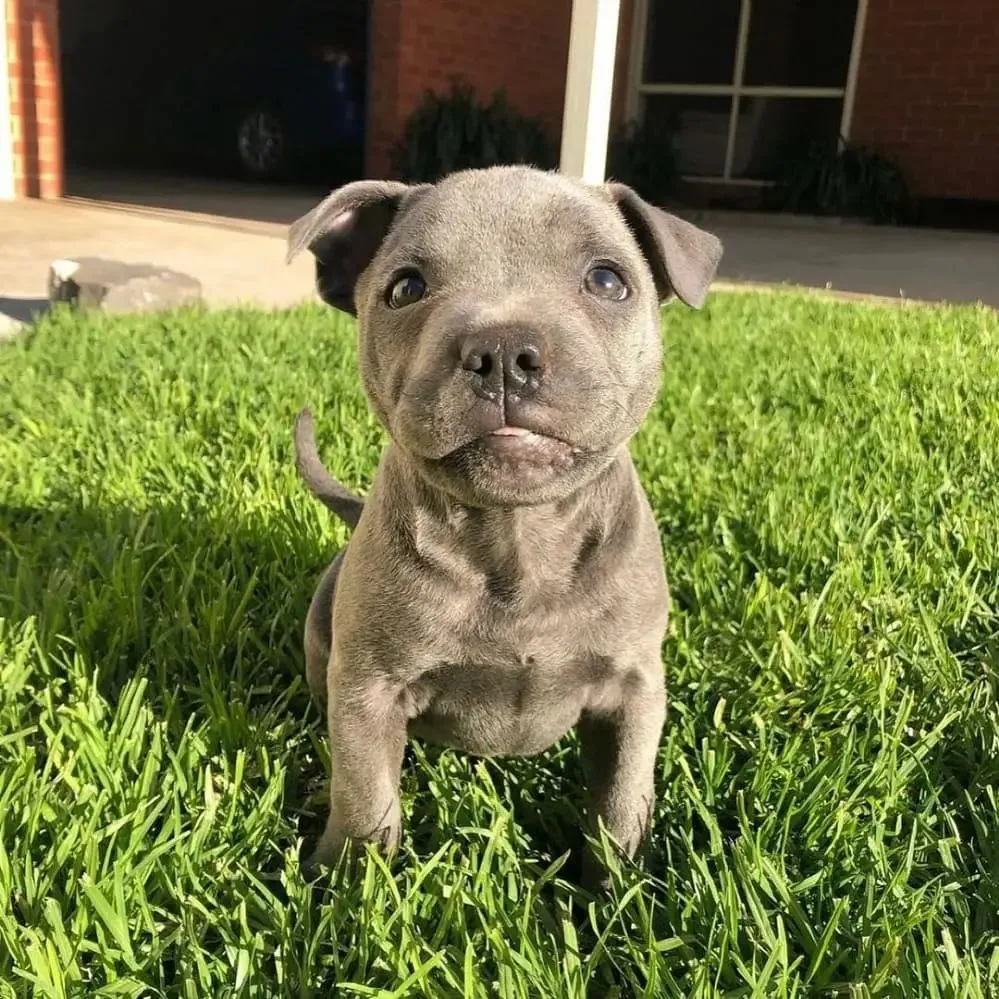
Ince Boy
Blue Available £1,500
A solid blue boy with a small white mark on his chest.
UK home delivery £200–£350 by distance, or collect in Carlisle
Reserve Ince £500 deposit reserves him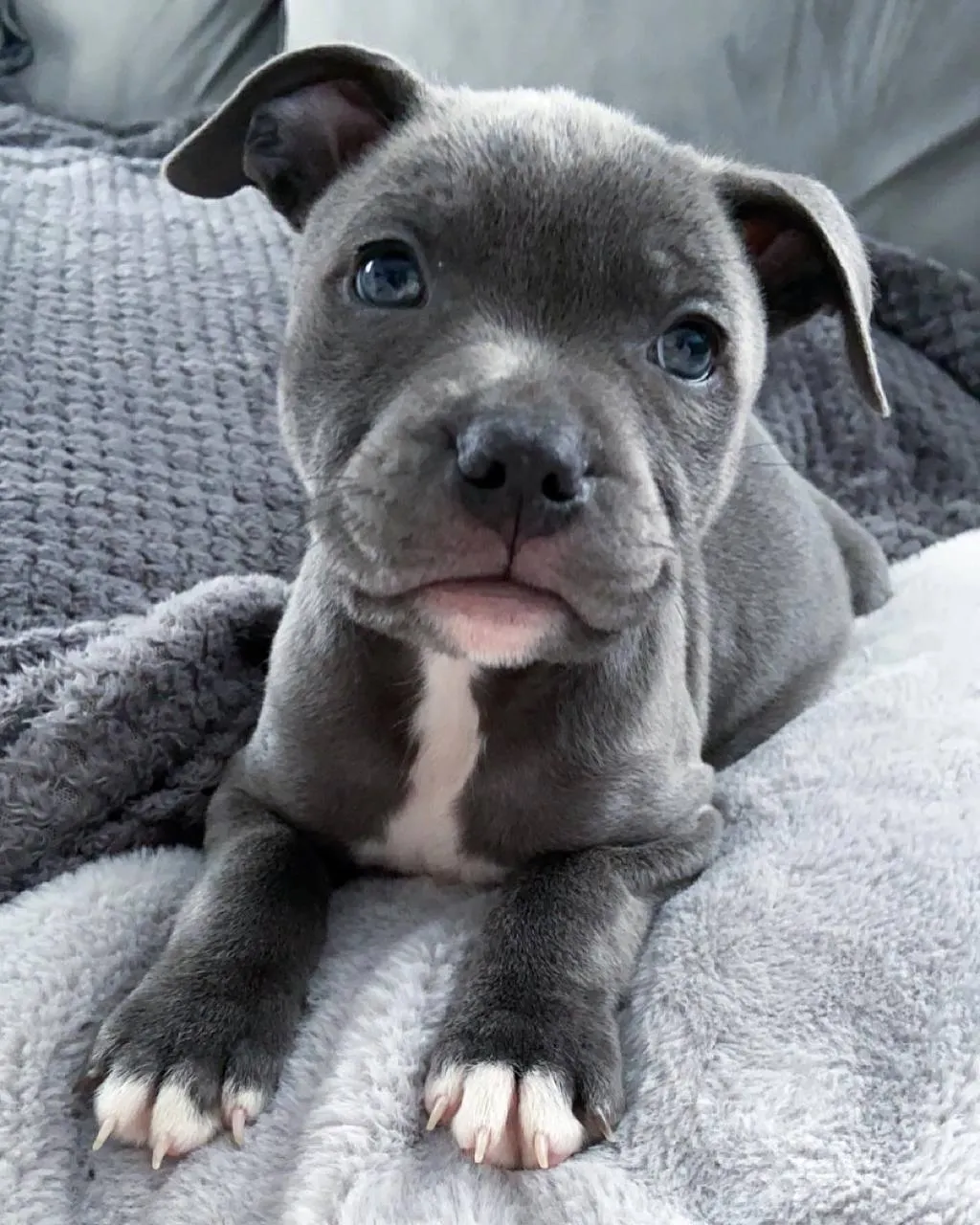
Vennie Girl
Blue with white chest Available £1,700
A blue girl with a white chest and white toes.
UK home delivery £200–£350 by distance, or collect in Carlisle
Reserve Vennie £500 deposit reserves her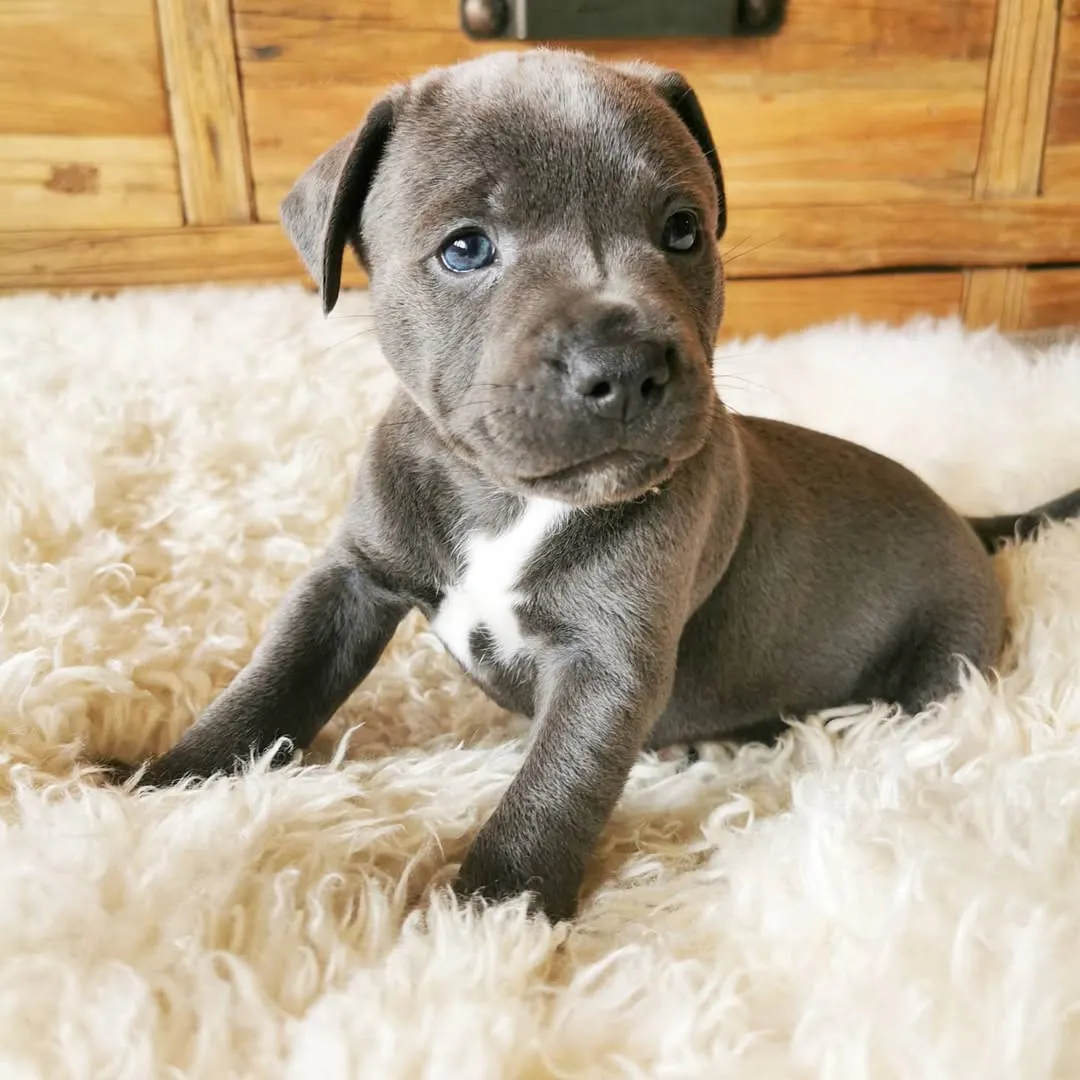
Christa Girl
Blue Available £1,700
A solid blue girl with a steady, thoughtful look, sitting up straight.
UK home delivery £200–£350 by distance, or collect in Carlisle
Reserve Christa £500 deposit reserves her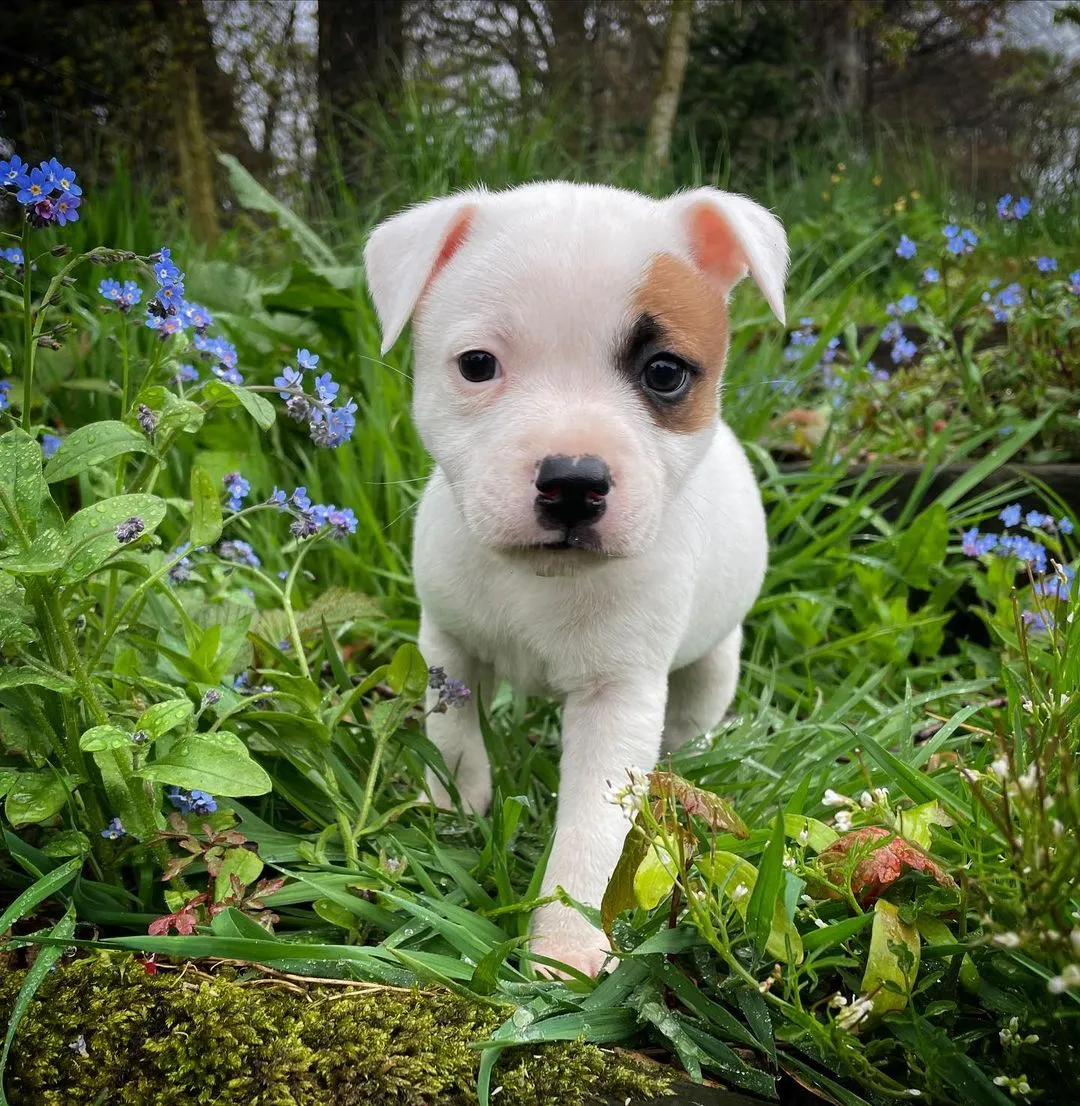
Cheryl Girl
White with tan eye patch Available £1,700
White girl, with a tan patch over her left eye and on her back.
UK home delivery £200–£350 by distance, or collect in Carlisle
Reserve Cheryl £500 deposit reserves herNo. Ince and Christa, our two solid blues, cost what every boy and girl costs here: £1,500 and £1,700.
£1,500 for a boy and £1,700 for a girl, from one price list with no line on it for colour. A "rare blue" premium elsewhere buys a coat, not a better dog.
They have, and some of our dogs carry black, so a black pup could come in a future litter, though I cannot say when.
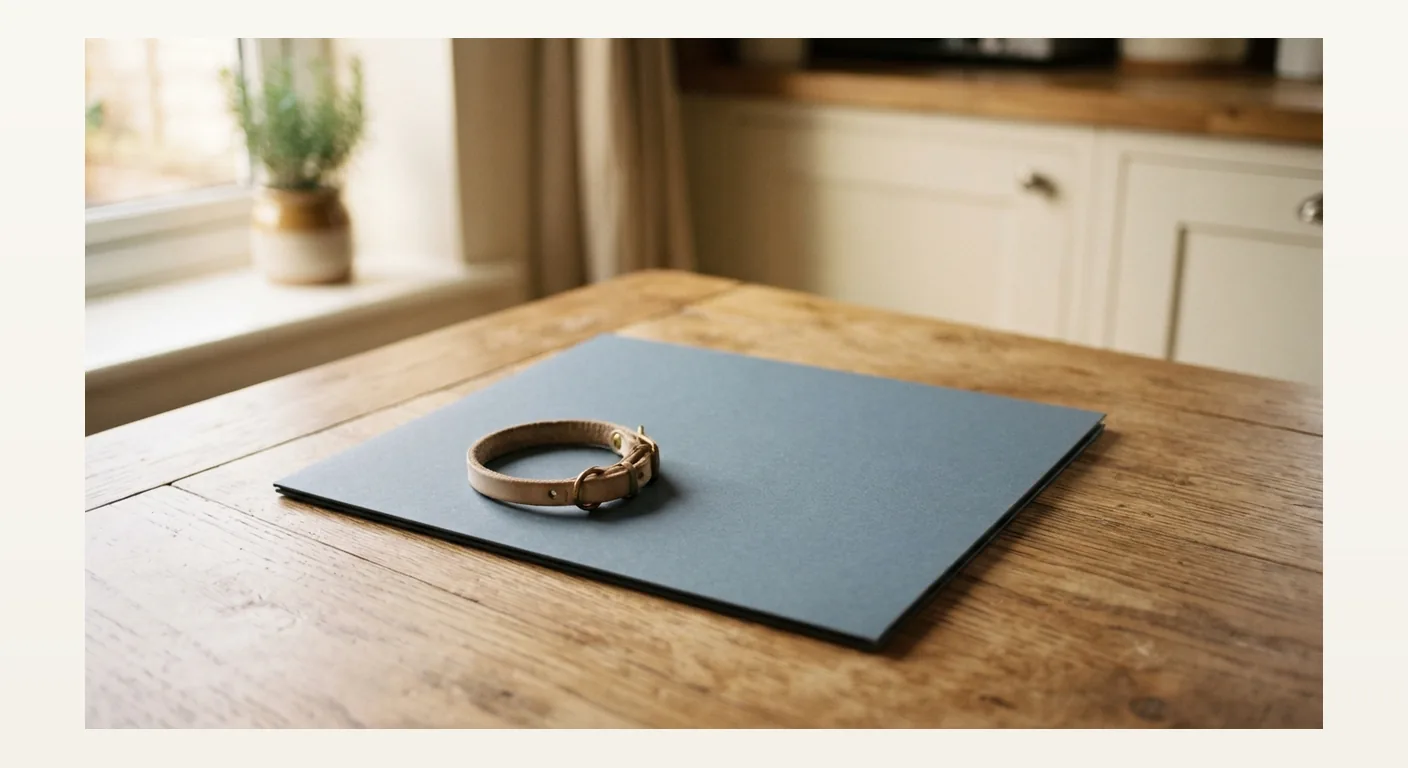
Every pup leaves us vaccinated and microchipped, with a registration application form so you register in your own name.
Yes. We are a KC-registered breeder; a registration application form with every puppy means you register your pup in your own name. Each pup is vet checked, vaccinated and microchipped before it leaves, all on a vet-signed health card.
In the folder too: vaccination records, microchip details and our written contract. Registration records a pup's parentage and is not a health test, which is why the parents' screening for inherited conditions matters as well.
With the same four checks, whatever the coat. An honest seller of a blue or a black passes all of them.

To tell a responsible breeder from a backyard one, see the mother with her litter and read the written contract first.
We expect every one of those questions ourselves, and a seller who dodges any of them, whatever colour the pup, has told you what you need to know. Support after collection comes from me rather than an agency.
Government guidance on buying a dog lists what a responsible seller should be able to show you. Put a coat question to us directly, and I will answer it myself.
Choose for the dog first and the coat last. Here is how the choice falls in the homes that write to us.
Choose blue for the slate coat and a pup from our litter now; choose black or black brindle if the jet coat matters most to you.
Choose blue if
the slate coat is the look you want, and you would like a pup from our litter now.
Choose black or black brindle if
the jet coat and the darkest nose matter most to you, or you want no dilution question at all.
A first-time owner
The coat changes nothing here: either colour asks the same training.
A home with children
The coat changes nothing here; the pup's temperament and how children handle it do.
A flat
The coat changes nothing here. Daily walks matter far more.
Long workdays
The coat changes nothing here: plan cover for long days in either colour.
Set on a black coat
Then a black is your dog, and there is none in our litter now.

Whichever colour you are weighing up, my answer is the look you will love for life.
Choose the look you will love for the dog's whole life, because nothing else about the two differs enough to decide it. If dilution worries you, a black or brindle takes that question away; if the slate coat is why you want a Staffy, a well-bred blue asks you to trade nothing.

Whether you should choose a Staffy puppy for its colour or for health and temperament, we put health and temperament first every time.
Not as the first reason. Should you choose a Staffy puppy for its colour or for health and temperament? Health and temperament first: the parents, the conditions they were screened for and the pup's own nature, then the coat. A rehoming charity's view of the breed is a plain read on what living with any Staffy involves.
The coat questions that reach us most, each answered from the standard, the study or our own dogs.
No. I make no allergy claim for either coat, and I know of no source linking a blue coat to allergies. The one coat-linked condition with a name is colour dilution alopecia, set out in the health section.
I cannot give you a figure, and I will not call either coat rare. Both are colours the breed standard lists, and neither is priced for rarity here.
No. Coat colour is not temperament. A Staffy's manner comes from its parents, its raising and its training, and those questions are the same for a blue as for a black.
No. Colour plays no part. Temperament, early handling and grown-up supervision do, and every pup of ours is used to kids before it goes home.
Neither. Training, exercise and care are the same for both, so a first-time owner does well with either coat from screened parents and a breeder who stays in touch.
No. How quickly a Staffy learns follows the breed and the individual pup. Short, kind sessions suit a puppy of any colour.
Either can, given daily walks and time with its people. The coat makes no difference to how a Staffy settles in a flat.
The same for both, because colour plays no part. Build up time alone slowly from puppyhood, and arrange company or a walker for long days.
No. Colour never changes a breed. A blue or a black Staffy is still a Staffordshire Bull Terrier, a breed that is not on the government's banned list.
No. A coat colour is not a breed marker. The breed named on the pup's registration application form, and both parents' registration numbers, tell you which breed it is.
You would still have the same dog. Temperament, size and care do not change with colour, so the Staffy you live with is the one you would have had in the other coat.
We write one page for each coat pairing buyers ask us about.
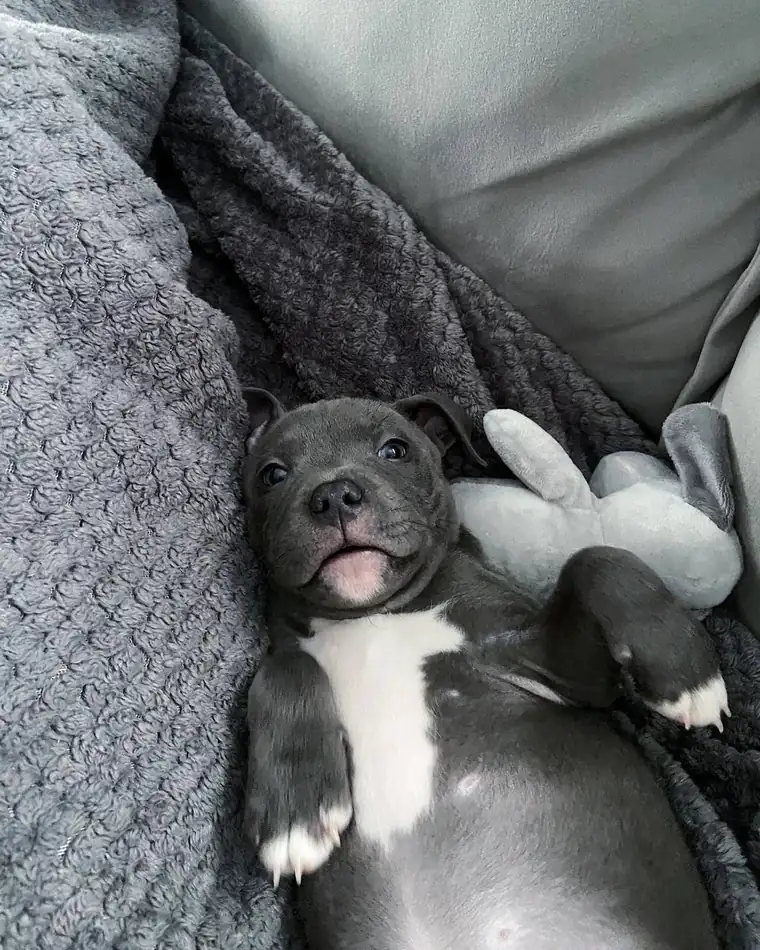
Vennie's white chest is why we wrote a second coat page, blue against blue and white, to sit alongside this one.
Blue against black · this page
One breed in two coats: equal on almost every row, different on the nose and one skin condition.
Blue against blue and white
A solid blue beside a blue that carries white, like Vennie. That page is still being written, so it has no link yet.
Whichever coat you choose, these are the buying questions families put to us before a deposit.
FactAnswered from the price list, the contract and the parents' tests
£1,500 for a boy and £1,700 for a girl, whatever the coat. A £500 deposit reserves your pup and comes off that price.
Yes, the whole of it, take-back terms included. We take a puppy back if the fault is ours, or if its owner can no longer care for it, and that promise is part of our written contract.
Yes, by DEFRA-approved transport, priced by distance, for £200–£350. Or you collect your pup from us in Carlisle.
Anywhere in Britain, by DEFRA-approved transport. The fee falls within £200–£350, set by the distance to your door, and I tell you yours before you pay anything.
Every pup on our listing carries its status. Tell me which pup caught your eye, and I check its status for you before you pay a penny.
Yes, and the answer is the same whatever coat you pick: Maggie and Jones, who live with us in Carlisle and parent every litter, are both DNA tested for L-2-HGA and HC-HSF4.
L-2-HGA, a neurological disorder, and HC-HSF4, an inherited form of cataract. Both parents were screened for each one. Ask us, and the certificates for Maggie and Jones come to you.
Yes, by appointment, before you pay any deposit. My dogs live in the family home, and you meet the litter here in Carlisle.
Its vet-signed health card, first vaccinations, microchip, worming and flea treatment, and its KC registration application form, with our written contract and our support after collection.
I breed blues by choice, from my own two dogs, raised in my home. I tell you plainly what the coat changes and what it does not, the one skin condition included.
Both parents' registration numbers are yours after you pay the deposit. With them in hand, the pedigree is yours to look up on the Kennel Club's own records.
Indoors, in my family home in Carlisle, never in outside kennels. The pups grow up with the noise of a busy household around them.
Tell us which coat caught your eye and a little about your home. I read every enquiry myself and reply with the pups that fit.
We use cookies to see which pages help families find us (Google Analytics) and how the site is used (Microsoft Clarity). Nothing loads until you choose. Our privacy policy